Monday, 30 October 2017

Snow Beard

Temperatures were down to -2C at dawn today and with it being even colder and with lots of snow further inland we can hope for some movements of birds looking for slightly more hospitable conditions. There are signs that we will have an invasion of Pine Grosbeaks this winter and the first bird was found in Oslo on Saturday by Stig “Mr. Grosbeak” Kalvatn who seems to have a magical ability to find this species in the forests around Oslo.

I also have high hopes of finding Great Grey and Hawk Owls given the good breeding season both species have had in mid/southern Norway and the large numbers of birds that should be moving around looking for food. Before these exciting species hit us though we can hope for mountain breeding seaducks which will be forced to head for the coast and maybe another wave of geese as the last birds leave Trøndelag heading for the coasts of northern Europe.

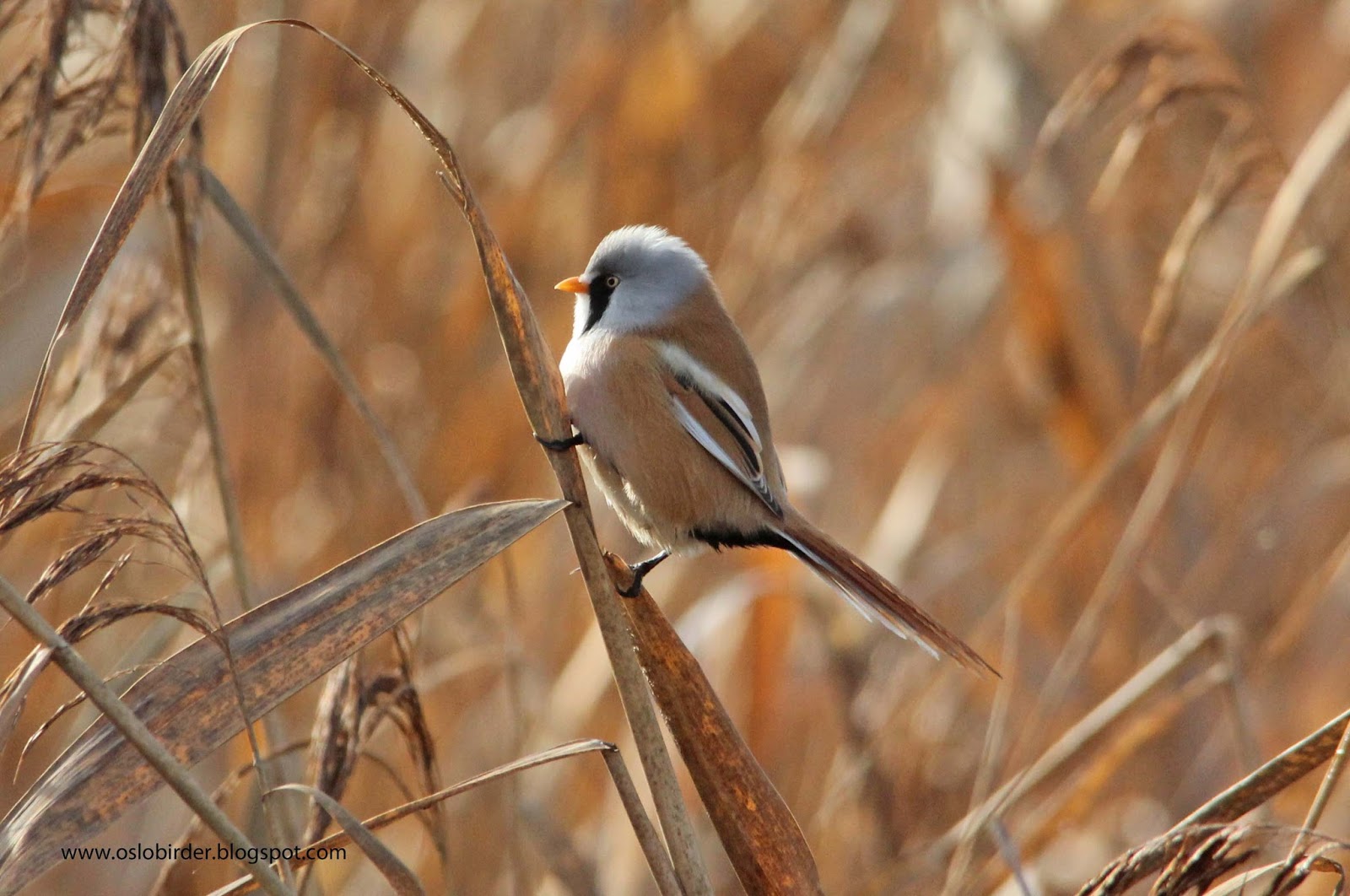
A species I had today that is probably weather related was three Snow Buntings which showed very well on one of the few remaining open areas at Fornebu. They seemed to be finding plenty of seeds to eat and will maybe stay for a few days. I also found a minimum of 14 Bearded Tits in a new area at Fornebu (with none being located in the two normal reedbeds). It really makes you wonder how many there have been in total this autumn and how many will stay the winter.

A shoal of cod feeding in very shallow water close to land was an unusual sight.


Snow Bunting (snøspurv) - one of three at Fornebu


Bearded Tits (skjeggmeis)


8 birds visibile in this picture

and 11 here!
cod (torske)

loads of them!

Friday, 27 October 2017

Hairy appendages


Nice and sunny with no fog today so I thought I'd try for the hairy titties again.

I found them and at times had them close, sometimes also with sun light on them and also close enough to use the flash but am I happy with any of the pics? Don't think so.

Behaviour wise though it was fascinating to watch them. I first found a pair (or a at least a male and female that were keeping each other company) and these two were quite noisy and flew around the reedbed. Sometimes also landing in birch trees and engaging in high flying but always plummeting back into the reedbed. On one of these high flyings they suddenly had the company of a third bird and after plunging down they carried on calling and allowed me to find them - a male had joined them. Whilst watching these three I could hear another bird in the reeds and eventually a female joined them. All four birds were very active and started go up a tree (never seen that before!) until they were all at the top and then they launched themselves into the sky. After a couple of rounds they headed towards Storøykilen. 

I checked out Nansenpark where a single Meadow Pipit didn't quite meet up to my expectations of a rare wheatear or shrike.

In Storøykilen everything was very quiet until after a long while I heard a ping. The Beardies were here but they were hardly calling, feeding low down out of sight and not interested in playback. I eventually confirmed 4 birds so they were presumably the ones from Koksa but their behaviour was so different. Now they were settled and focused on feeding rather than seemingly being more interested in finding a new location and other Beardies which their behaviour in Koksa suggested was top of their minds earlier. If they are now settled for the winter then they will become increasingly difficult to find them but it is still early in the season and more birds may turn up and be lively for at least the first few days post arrival.

Otherwise the Jack Snipe was still present and four Water Rails were calling. One of them clearly got frightened by something in the reedbed because it flew up squealing and perched in the reeds before again flying up in a noisy panic and flying 15 m over the reeds before tumbling down. There was also a late(ish) Reed Bunting which showed really well but why wasn’t it a rarer bunting?

Stopping to do grocery shopping on the way home gave me my first Waxwings of the autumn and reminded me how much I like hearing their call. Let’s hope there will be lots this winter.


male Bearded Tit (skjeggmeis) taken with superzoom using flash


a female feeding on the ground 


always something between me and the bird

and again a reed is in the way

never seen Beardies in a tree before


the four leave Koksa  in the direction of Storøykilen
the light was great in Storøykilen but the birds were far less cooperative


although I did get a couple of close up opportunities


and the Reed Bunting (sivspurv)

Thursday, 26 October 2017

Changeable seasons

Talk about contrasts. After Tuesday’s cold, wet autumnal weather yesterday ended up of the warm and sunny autumnal sort although snow could be seen on the hills north of Maridalen and further north there have been large amounts of snow.

Jules and I went walking in the forests of Lillomarka hoping for some nice taiga species such as Pine Grosbeak or Three-toed Pecker. We had to settle for Parrot Crossbill and Great Spotted Pecker but the walk was nice.

A lot of birds have cleared out now but in Maridalen there were still three Meadow Pipits.

Today started with no wind and fog but after lunch the fog lifted and it was blue skies again. I spent the foggy period at Fornebu which I had all to myself – no birders, no dog walkers, no joggers just me and a few birds. The Bearded Tits showed very well in the fog and there were 3 males and 2 females. I have always wondered whether the birds are already paired up during the autumn and winter but today’s observations suggested not. At one stage four of the birds flew to another part of the reedbed leaving a single male who started calling nervously. I believe he had been down on the ground when the other four flew and just missed the boat but this led me to believe that the other four birds were two pairs. However, when I later encountered the birds then I saw three males and a female together with another bird calling from about 50 metres away. This then led me to believe that the birds weren’t paired as why would the other female not have been with her mate?


Other birds I had at Fornebu were three calling Water Rails, a Jack Snipe and 4 Common Snipe. Robins also were very noticeable and were I expect migrant birds on their way out of the county but I had no warblers or pipits and just a handful of thrushes.


It was foggy at Fornebu today

but Bearded Tits (skjeggmeis) brighten things up

nice footwork from this female

all five of today's birds - 3 males and 2 females


snow above Maridalen yesrerday

female Parrot Crossbill (furukorsnebb) 
male and female Parrot

male Common Crossbill (grankorsnebb) in Maridalen today. This bird was singing. Note the smaller bill than on the Parrots

Tuesday, 24 October 2017

Oslo Island birding

It’s all a bit autumny at the moment with rain, northerly winds and a cold dampness in the air that does not do much to increase your desire to be outside. But it is exactly these sorts of conditions that one does need to brave if you want to see anything exciting. Jules Bell was out on Gressholmen yesterday and found two Red-necked Grebes which is a very good local bird. I persuaded him to join me today for a thorough visit to not just Gressholmen but also Lindøya and Nakkholmen. We listed up our expectations for the day. Mine included Mugimaki, Pallas’s Warbler, Hume’s Warbler and Firecrest. Jules who has now birded Oslo enough times to know where the expectations should lie settled with Rock Pipit.

Passerines were not very cooperative and there were no warblers, chats or pipits of any description with a flyover Snow Bunting the absolute highlight. Waterbirds were slightly better. The two Red-necked Grebes, an adult and a stripy juvenile, were still present and gave good scope views. We also had a few Common and Velvet Scoter, Guillemot and a single Red-throated Diver but not the large numbers of sea duck that I had hoped might have turned up. We did have some waders though with two Purple Sandpipers and a late Oystercatcher. So, my expectation may not have been met it wasn’t too bad.


We had a couple of Common Seals and foxes on both Gressholmen and Lindøya. We saw a lot of droppings on Gressholmen and it is clear that the animal was eating a lot of rowan berries and one must wonder how long it can survive on them.

distance and light did not make it easy to photograph the Red-necked Grebes (gråstrupedykker) but this should count as a record shot. The juvenile is on the left with a stripy cheek and red neck whereas as the adult is in winter plumage and no longer has a red neck.


2 Purple Sandpipers (fjæreplytt)