Friday, 4 January 2013

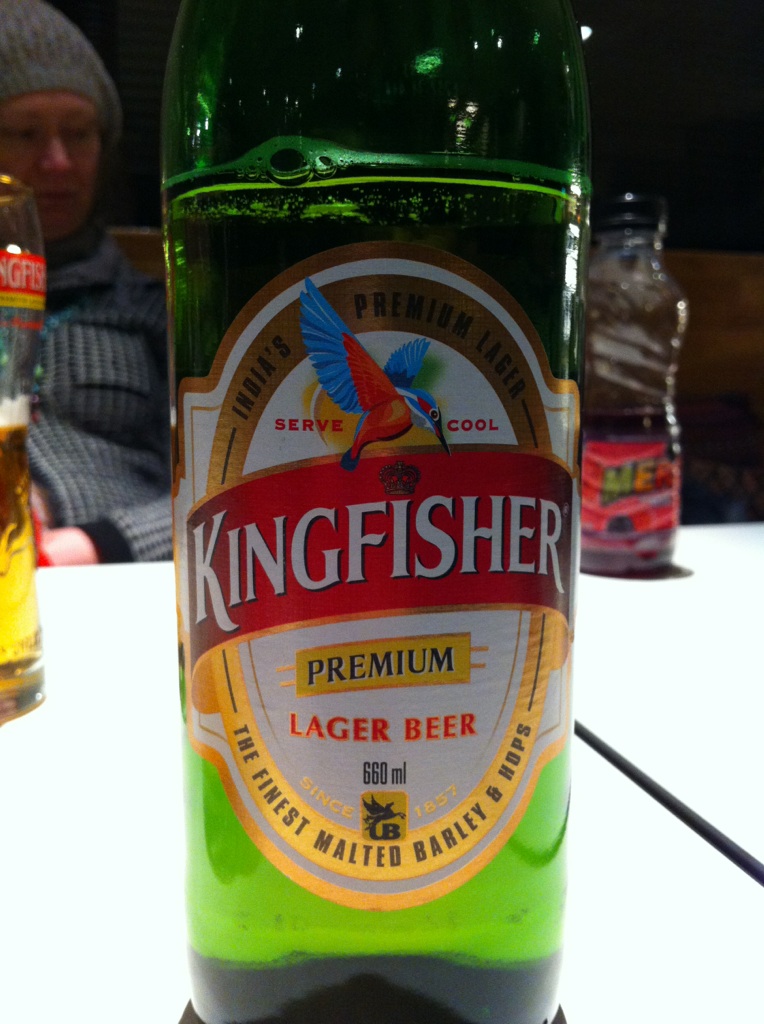
Mine's a Kingfisher


Today was my first outing of the year with Rune (4 days was a very long time to wait!). The ultimate target of the trip was the Kingfisher (isfugl) in Halden but there was a lot of birding to be done before we arrived there. First stop was a drive by of yesterdays Hawk Owl. Today it was sat on a combined lamppost and telegraph (electricity?) pole and as usual showed itself off in an exemplary manner. We were unable to find the second bird in the area but did have Great Grey Shrike (varsler) – the first of three during the day, so it looks like the Great Grey radar is up and running again.
Continuing into Østfold we stopped at Kurefjorden. Here we had one of the usual Rough-legged Buzzards (fjellvåk) on the Sletter islands along with an enormous Goshawk (hønsehauk) that was ripping up a prey item. Good numbers of Velvet (sjøorre) and Common Scoter (svartand) but no auks or divers. Kurefjorden itself was nearly completely frozen which was very surprising given that it was +3C and there has not been exceptionally cold weather recently. The waterfowl that were left were therefore concentrated in the mouth of the fjord. There was not too much to see with a single Slavonian Grebe (horndykker) alongside a handful of Great Crested Grebes (toppdykker) being the highlight. At Viersholm we had our second Shrike of the day.
Continuing towards Fredrikstad we had a Common Buzzard (musvåk) and our third Shrike of the day. In Fredrikstad we chanced upon the resident Carrion Crow (svartkråke) and easily saw the tame male Gadwall that has been present a few days and is clearly paired with a female Mallard (stokkand).
male Gadwall (snadderand). This bird was quite vocal and in fact I can't remember having heard one call before

These two are a definite pair. The male hybrid offspring of Gadwall and Mallard is a very attractive b*strd that resembles Baikal Teal. Maybe there will be something to set the pulses racing next year.

At Fuglenebb, Torsness we had good numbers of swans with 130+ Whooper (sangsvane) and 30+ Mute (knoppsvane) although we found no geese.
With it being close to 2pm and the sun clearly going down we rushed to Halden. We couldn’t find the Kingfisher at its usual site and tried the mouth of the river but again without luck. I started thinking that the only Kingfisher I would see this Friday evening would be the onbe pictured above but we returned to Porsnes and decided to wait in the belief that this is where it roosts. After about half an hour of looking it shot past us at in the gathering gloom at 1515 going up river at speed. We ran after it and briefly saw it perched before it called and then flew off. A couple of blurred pictures of something electric blue in colour are the only proof of our brief encounter.


even a blurry photo can look good when this is the subject

spot the bird
So, all in all, a day with good birds and good company has to go down as a good start to 2013.


Oh, in case you had thought I was over my addiction then you are wrong – here are a couple of pictures of Hawkie.

land line telephones are being phased out in Norway. Once they are finished and telegraph poles have been removed then I fear that Hawk Owls will be forced into extinction as they seem to be entirely reliant on them.

Thursday, 3 January 2013

A shot of Hawkie please


Hawk Owl is back on the streets and this latest batch is of exceptional quality. I went looking for my dealer again today and as usual he was hanging around a street light showing off his wares.

I awoke this morning to 5cm of new snow and mist which was not how I had interpreted yesterday’s weather forecast. I needed my fix though so I still went looking for the two Hawk Owls (haukugle) reported yesterday. I found the first one incredibly easily sat on top of lamppost over the road close to Kroer. I admired him for a bit in mist and then went looking for the other one hoping there would be better light there. The mist was even worse at the second location and I couldn’t see more than 200m and was unable to find the bird. I did make out a Great Grey Shrike (varsler) in the murk though. Returning to number one the mist had possibly lifted slightly and he was sitting in exactly the same spot. As usual with these birds he was completely unfazed as I stood no more than 10 metres from him. After a few minutes he clearly heard a possible prey item and started looking intently over his shoulder at the verge on the other side of the road. I decided to take some steps back, zoom the camera out and increase the shutter speed to 1/1000 so I had a chance of catching some possible hunting action. After a few minutes he seemed to lose interest and I needed to put my gloves on. Inevitably as I did so he flew down and caught a shrew literally right by the side of the road. I managed some pictures after the act but he then quickly flew off to eat in peace. Clearly I don't yet have all the skills yet to take successful action shots although on the upside the resulting pictures are better than my previous attempts.
Hawk Owl (haukugle) with shrew caught 50cm from the road

that quizical look

The marks left in the snow where it caught the shrew (which I presume was under the snow)

fluffed up

the preferred lamppost

with the shrew

immediately after capture

listening to the shrew, just before it flew down and caught it

A garden close by had a large mixed flock of Greenfinches and Tree Sparrows with three Chaffinches and two Bramblings mixed in.

Whilst waiting for the mist to lift I went to Drøbak hoping for a couple of easy year ticks. The Carrion Crow came after I threw some bread out but I failed to find myself a Little Grebe.
Carrion Crow (svartkråke) and Hooded Crow (kråke). These birds are clearly a pair

Two young Herring Gulls squabbling

Carrion Crow

Jackdaw (kaie) of the pale collared nordic race

Driving back to Oslo I had a look around Maridalen and whilst I tried to find myself some grosbeaks I thought I would check the latest sightings on my phone and saw that a Glaucous Gull (polarmåke) had just been seen 25 minutes away in Sandvika. Well it wasn’t yet 2pm so I had plenty of time (and the grosbeaks will give themselves up another day). The gull was reported as being by the car park of a supermarket which backs on to a river. There were a few Herring Gulls (gråmåke) hanging around when I arrived but nothing paler (not even a potential hybrid). There is an easy solution to these problems: go in the shop and buy the cheapest loaf of bread they have and then throw it out. The white-winged wonder (or more precisely cream-coloured) appeared immediately and was not backwards in coming forward. This was a particularly large bird so was most likely a male and was dominant over the Herring Gulls. It came to within a couple of metres and even at 150mm I could not get the whole bird in shot, at 500mm I could just get the head. With this level of tameness, how long before it is brandishing a shiny ring?
As always it was a great bird to see and will hopefully hang around to brighten up the short, dark winter days.
I was even able to take an acceptable video with the iphone.
1st winter (2cy) Glaucous Gull (polarmåke) taken with 150mm


squabbling for food

close up, uncropped 500mm


Wednesday, 2 January 2013

Getting started


My birding year has yet to start properly but today I at least got out in the fine winter weather today. Mrs Oslo Birder and I had hoped to do some cross country skiing in Maridalen but the recent thaw and now freezing temperatures has meant that the lovely powder snow of a week ago has become a thin layer of ice so we dropped the skiing and walked instead. I added a few species to a year list that stood at a meagre 11 species after 1 Jan with the highlight being a male Black Woodpecker (svartspett).
Black Woodpecker (svartspett) in Maridalen
After that we watched the Hobbit - a fantastically made film but why have they had to be so greedy that they add loads of unnecessary scenes to make a thin childs book into a film trilogy?

It has now been three weeks since I last saw a Hawk Owl and you would think that I was now successfully detoxed. Well, I don’t think that I am. A report today of two within a kilometre of each other only 40 minutes from Oslo (and both were also present 11 days ago) means that I know where I am taking the camera tomorrow.

Tuesday, 1 January 2013

Happy New Year

Perhaps my favourite picture of 2012 - a Spotted Flycatcher (gråfluesnapper)

And that was the end of 2012, a year that I am very, very happy with. There were many birding highlights: my highest ever year list, seven self found rarities and a great trip to Værøy. On top of this I became a member of the Norwegian Rarities Committee, this blog has built up a solid audience, I had my first paid guiding assignments, I've taken some first rate photos and to top it all off I filled my boots with the autumns invasion of two of my favourite species: Pine Grosbeak (konglebit)and Hawk Owl (haukugle).

The winter months offered up Great Grey Owl (lappugle), Iceland (grønlandsmåke), Glaucous (polarmåke) and Mediterranean Gulls (svartehavsmåke) close to Oslo. A trip to Finnmark at the end of March gave good numbers of King (praktærfugl) and Steller’s Eiders (stellerand), White-billed Diver (gullnebblom), all the auks, Hawk Owl, many Glaucous Gulls and a couple of Iceland Gulls.
1st winter Iceland Gull (grønnlandsmåke) - one of the early winter highlights

Great Grey Owl (lappugle) - do birds get better than this?


Mediterranean Gull (svartehavsmåke)

male Steller's Eider (stellerand) - perhaps even better than that owl?

Some great spring days birding often with Rune Zak, gave me species like Red-footed Falcon (aftenfalk), Serin (gulirisik), Red Kite (glente), Pallid Harrier (steppehauk), flocks of Dotterel (boltit), Ortolan (hortulan), Broad-billed Sandpiper (fjellmyrløper), summer plumaged White-billed Diver plus huge numbers of migrating waders at Svellet.

female Red-footed Falcon (aftenfalk). Crappy picture but great bird to find

Ortolan Bunting (hortulan) - one of only a handful left breeding in Norway

Pallid Harrier (steppehauk)

The summer gave me River Warbler (elvesanger), Blyth’s Reed Warbler (busksanger), Balearic Shearwater (balearlire) and lekking Great Snipe (dobbeltbekkasin) alongside the commoner birds Norway has to offer. Our annual week holiday in Beitosølen in the summer gave in addition to the Great Snipes, most of the mountain specialities such as Dotterel, Temminck’s Stint (temmincksnipe), Purple Sandpiper (fjærplytt), Shore Lark (fjelllerke), Golden Eagle (kongeørn) etc. After this I guided a VENT group for a week from Oslo to Bergen with some good birding on the way.


Blyth's Reed Warbler (busksanger)

not a highlight but a cracking bird none-the-less, a child friendly Red-breasted Goose (rødhalsgås)

Dotterel (boltit) - one of the highlights of the Norwegian mountains in summer
Great Snipe (dobbeltbekkasin) - a hard to find Norwegian summer specialty

 he early autumn offered up some good wader passage at Kurefjorden and Barred Warbler (hauksanger) at Fornebu. Late September was spent on Værøy with tens of Yellow-browed Warblers (gullbrynsanger), Siberian Stonechat (asiasvartstrupe), Red-flanked Bluetail (blåstrupe), hornemanni Arctic Redpoll (polarsisik), Olive-backed Pipit (sibirpiplerke) and Blyth’s Reed Warbler. Autumn was broken up with a week in Mallorca with some good birding had at S’Albuferua.
Red-flanked Bluetail (blåstjert) - a rare migrant

Yellow-browed Warbler (gulbrynsanger) - a scarce migrant

hornemanni Arctic Redpoll - an overlooked autumn vagrant

Siberian Stonechat (asiasvartstrupe) - a real rarity

Late autumn gave me Grey Phalarope (polarsvømmesnipe), Hoopoe (hærfugl), photogenic Bearded Tits (skjeggmeis), Ural (slaggugle) and Tengmalm’s Owls (perleugle) plus the aforementioned invasion of Pine Grosbeaks and Hawk Owls. As the cold winter months took hold the grosbeaks and owls continued to entertain and a Kingfisher (isfugl) added a colourful splash.


Ural Owl (slagugle) - although a Norwegian resident this is an incredibly hard bird to get to grips with

An admiring Tengmalm's Owl (perleugle)

Bearded Tits (skjeggmeis) - a scarce bird in Norway

Waxwing (sidensvans) - a common autumn bird in Oslo

My Norwegian year list ended on 259 species which put me in joint 8th place. One more species and I would have been joint 6th, so I can really regret not seeing either Willow or Rock Ptarmign.

What will 2013 bring? I haven't decided whether to focus on my year list but will definitely fit in trips to Finnmark and a far flung island.