Well, it seems birding still has something to offer so
butterflies can wait just a bit longer which is just as well given the wet and
cloudy weather we are forecast to have.
Just after I wrote my last post an evening trip to Fornebu
allowed me to first hear and then see a Gropper that had been found earlier in
the day. Grasshopper Warbler remains a very scarce and not even annual special around
Oslo and was unsurprisingly the first record of the year. This is the second
time I’ve heard one at Fornebu with the first being a bird that arrived at the
end of April in 2019 and hung around for a month. An April arrival fits in with
the small regular Norwegian breeding population that are mostly found on the
west coast whereas an arrival at the end of May/beginning of June (that is the
normal fare in south east Norway) which often occur during warm periods with
southerly winds may well be a bird that has already tried its luck somewhere
else in Europe and has then decided to move north looking for more joy.
Grasshopper Warbler (gresshoppesanger) Fornebu
Last night I was about to go to bed but then looked at the
weather forecast and realised that even though conditions were not perfect (it
was cloudy and damp) it would be quite a few days before there were any better
conditions for some night singer activity. Maridalen started very quiet with
just two Woodcocks for my troubles as I got to the end of the valley. A distant
Tawny Owl had me trying to drive closer to locate it as amazingly enough this
was only my second record this year. Early spring nocturnal sorties had
resulted in just one very distant singing Tawny Owl which must have been a sign
of how little food there was. Vole numbers may be picking up though as in
addition to the two Tawnies I now heard a GGO was photographed in the forest just east of Maridalen last week. Maybe Oslo will have an owly autumn and
winter?
As I drove with the window open I heard a noise that I
thought was from the car but after turning off the engine (an electric car
would be very good on these trips) I realised I was listening to my second
Gropper in two days and only my fourth ever in Maridalen - and boy did it sing!
I was able to see it quite well using my head torch and whilst doing so I
thought I heard a Nightjar call. A bit later it called right over me and I then
got to see it really well as it hunted moths around me and even sang briefly
from a fence post.
I set about trying to record this unforgettable experience….
but as usual my phone has far fewer videos than I thought I took plus a good
number of videos of the ground…. I thought I was seeing a
red light showing I was filming but surprise, surprise things were not as I
thought. I wonder if there is a support group for people like me? I also had
the superzoom with me but despite use of the head torch it really struggles in
the dark. I did get some documentation though:
First a video of the Grasshopper Warbler with a bonus Sedge Warbler at the end:
Pictures of the Nightjar
Nightjar (nattravn)
here we can see the white wing patch showing it to be a male (as confirmed by it singing)
And video of the Nightjar which does have a sequence of it moth catching from a fence post and then briefly singing with the sound of the Gropper all the time in the background:
On the way out a Sedge Warbler was in full song and this was
a Maridalen tick for me🥳. I had first heard it
in the middle of the day but only a couple of snatches of song which were not
enough to confirm the ID. The ID was later confirmed though by Jon Andrea, an
up and coming teenage birder who gives me hope that birding in Oslo has a bright
future and by the evening it was not holding back.
There are now two Barnacle x Canada hybrids in Maridalen and
both are different to last week’s bird so we really are talking about an
influx.
both of the Canada x Barnacle (hvitkinngås) Geese hybrids
paler bird with a white forehead and hardly any hint of a darker chest
the darker bird
this bird is I am sure the paler bird but due to its posture it is showing off a white neck collar which doesn't show in the other photo
the darker bird really stands out
here the darker bird, a Canada with too much white on the head and a Canada x Greylag hybrid
I went looking today for a retrospectively identified (heard
only) singing Red-breasted Flycatcher found last week and which is the first
record in Oslo since the last bird in Maridalen in 2019. The area where I believe
it was heard looked just like the areas where they have previously been found
breeding in Oslo but I heard nothing which either means it has moved on, or he
is mated up and breeding as in my experience they go silent as soon as that
happens and only start singing again once the eggs have hatched. The area was coincidentally
one I have frequently visited for butterflies especially Northern Chequered Skipper
and a brief period of sunshine did wonders and in addition to the skipper I
also had a couple of Wood Whites which is a species I have seen even less often
than the skipper.
here showing the underside of the wing and with a Green-veined White (rapssommerfugl)
and here with a Brimstone (sitronsommerfugl)
At Fornebu it was also great to find a Ringed Plover family. The species only regularly breeds around Oslo only on Gressholmen and at Fornebu. A couple of pairs have tried breeding at Gressholmen this year but seem to have failed despite two attempts whilst at Fornebu the available habitat is getting smaller and smaller. Finding this adult with two young about a week old was therefore heart warming. They were close to a road and two young have also most likely been lost (they lay 4 eggs) and the odds are against these two but fingers crossed that they make it.
here the adult is sheltering one young whilst another runs away. I was watching from the car.
this is the one that was being sheltered. Note that the legs of the young look already to be fully grown
I am currently in Tromsø where I am helping Jr settle into her new life as a student at the university here. Tromsø is a great town (to call it a city is rather overdoing it though and who ever came up with the description «Paris of the north» should take some time out from describing things) and we are currently enjoying very warm temperatures although in just a few months it will be all snow, darkness, hopefully northern lights and unavoidably thousands of foreign, mostly asian, tourists seeking these «exotic» delights.
Now though this town which boasts the most northern football team, and now also McDonalds, in the whole, wide, world is full of nervous students about to start a new life, apprehensive parents, and yesterday the whole circus that accompanies professional cycling when the last stage of the Arctic Race of Norway was held here and myself and Jr managed to photobomb the winner interview, it was my birthday afterall🥳
I have only allowed myself a little birding and am only using the bus to get around but there is a lot of potential up here. Prestvannet, a small lake 10 minutes bus journey from downtown is a fantastic place with many breeding, and noisy, Red-throated Divers, a good variety of ducks, a few waders including Spot Red when I was there (and apparently lekking Ruff in May) and both Common and Arctic Terns. Tromsø is on an island and the surrounding fjord obviously has potential. By the airport there are some mudflats and here I had a good collection of waders including (distant) Red-necked Phalarope, Little Stint and Ruff. Turnstone also breed in the area and I look forward to seeing them next spring. There were hundreds of seaducks too far out for my bins to ID so I may have to bring my scope on future visits as there must be the chance for some interesting species.
Downtown is full of breeding gulls with Kittiwakes nesting on window ledges, signs and more recently especially built «hotels» which allows incredibly close contact with these birds and their nests. Common and Herring Gulls are also common urban breeders and I have never seen such a concentration and variety of urban breeding gulls before.
Prestvannet
A Spotted Redshank (sotsnipe)
Red-throated Diver (smålom) with a surprisingly small young. Others were nearly fully grown
This Common Gull (fiskemåke) was ringed here as an adult in August 2018. In Feb 2022 it was in Hull, UK
This bird was ringed here as an adult in August 2010 and has been seen regularly but only in Tromsø
Langnes near the airport where I searched for waders
A young Ruff (brushane)
An Arctic Tern (rødnebbterne) that clearly had young nearby as it was very unhappy with my presence
A Sedge Warbler (sivsanger)
My first Little Stints (dvergsnipe) of the year
Adult and juvenile Redshank (rødstilk)
Oystercatchers (tjeld)
Whilst many young Common Gulls were already fledged this youngster still has a number of weeks before independence
This Meadow Pipit (heipiplerke) was still feeding young
The Kittiwake (krykkje) hotel
I haven’t yet managed to find out any information about this ringing scheme. It doesn’t cease to amaze me that colour ringing schemes can be so hard to work out - surely you only colour ringing schemes can because you want to get reports of observations
As it turned out Day 3 was not over when I blogged yesterday evening. I decided to go out with the thermal imager at 2130 and didn’t get back until 0030!!
First I found feeding Common Snipe, Jack Snipe and Golden Plover. Then I noticed the northern lights above me, then I started hearing nocmig (Redwing, Song Thrush, Snow Bunting and Reed Bunting) and then I joined in Storm Petrel ringing. It was a very succesful session with me seeing what I thought was an impressive 13 birds but the session carried on until 5am with 44 caught including 4 with Norwegian rings from before.
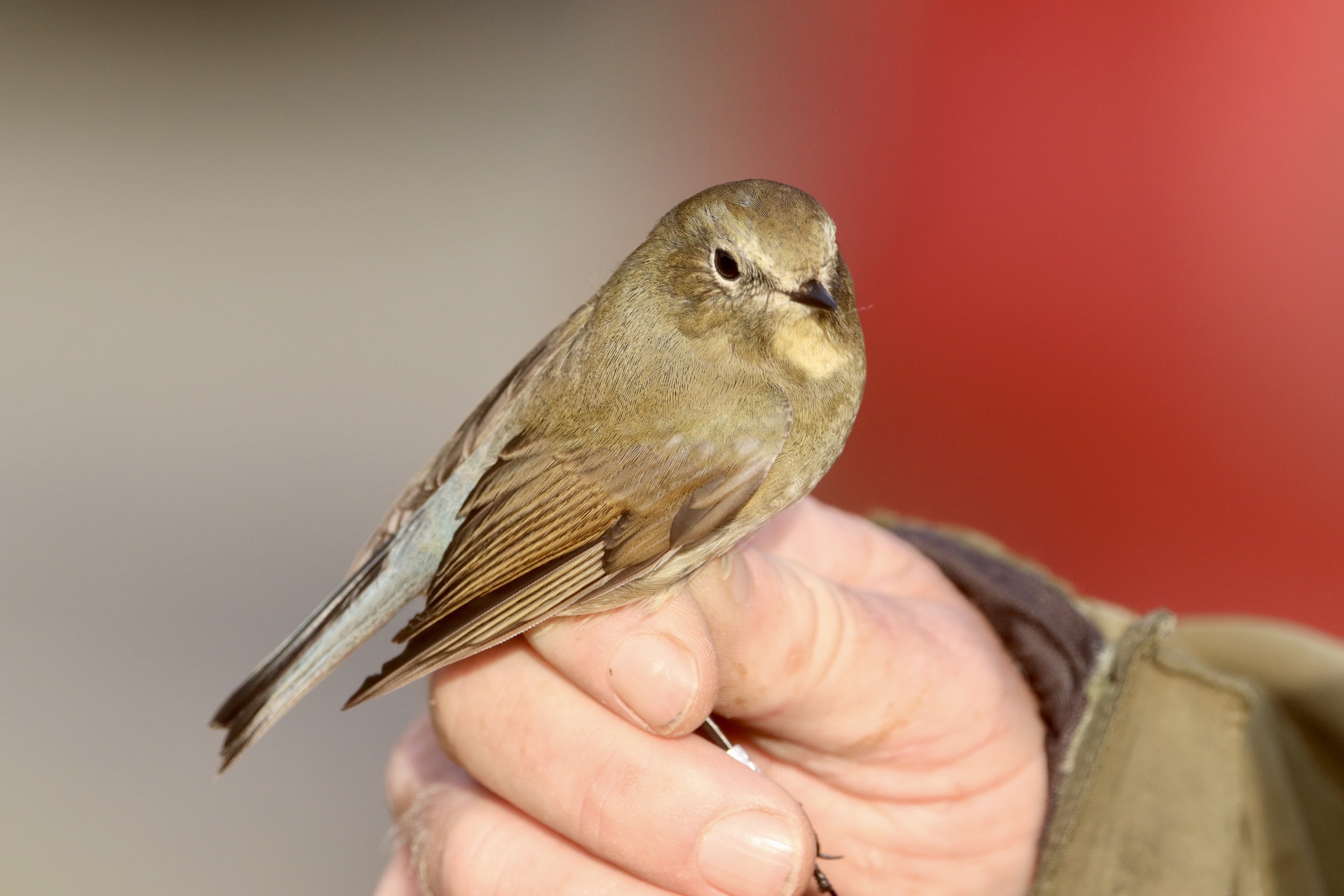
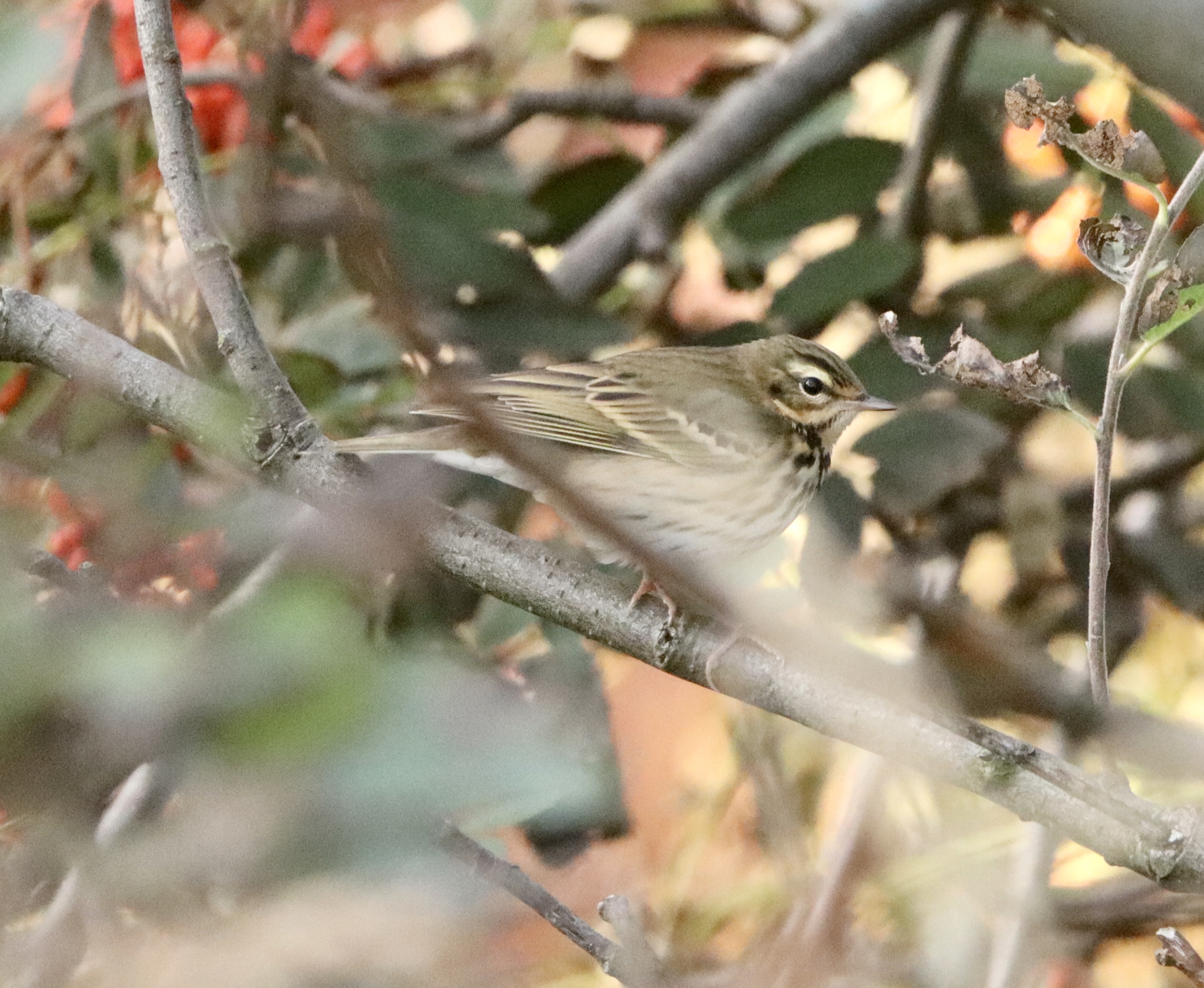
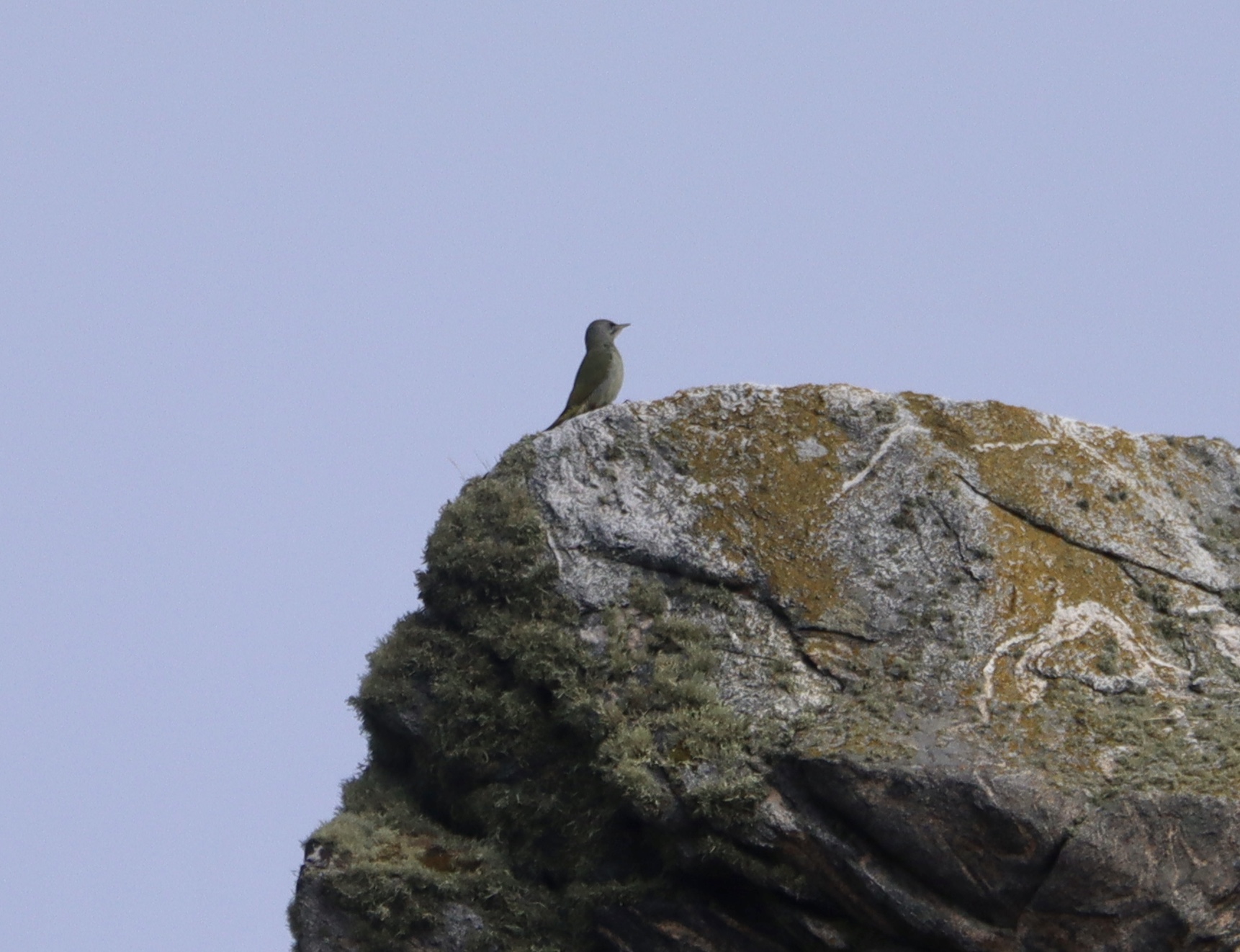
I was then buzzing a bit too much and couldn’t sleep until gone 2am and was awake at 7 so am rather tired now. BUT today m, or at least the early morning, has been a good day. When you walk out the door and the first bird that greets you is a clearly newly arrived Yellow-browed then you know the day has potential. New birds were discovered in quick succession with a Little Bunting, an Olive-backed Pipit and then a Red-flanked Bluetail all before breakfast. It felt natural to assume that once we searched more of the island as the day wore on that we would find something big. But in fact there was precious little to see after that. Two Grey-headed Woodpeckers were decent enough but not of the calibre that the morning glory had promised.
Red-flanked Bluetail (blåstjert). As can be seen this bird was caught and ringed (in a mist nest). Not quite as cool as finding one in the field but a great chance to see it up close
Look at that tail!
Olive-backed Pipit (sibirpiplerke)
Little Bunting (dvergspurv)
A glimpse of one of the six Yellow-browed Warblers (gulbrynsanger) I saw today
Arctic Redpoll (polarsisik)
Merlin (dvergfalk)
Waxwing (sidensvans)
Sedge Warbler (sivsanger) breeds on the island but is less than annual for us in September
A tristis Siberian Chiffchaff
The first Grey-headed Woodpecker (gråspett) hid in a rowan tree
Whilst the second was calling from the top of a hill