Showing posts with label dragonfly. Show all posts

Sunday, 28 June 2026

A dragon here, a dragon there

Yesterday I wrote that finding a new species of dragonfly might be what I needed to reignite my interest in them - what will finding two do?

This morning I revisited the pond hoping there might be someone working the land who could let me through the fence. No luck on that score but I set about viewing from outside the fence again and quickly noticed there were a few more large dragonflies than yesterday. The Emperor was still present and I was able to get better pictures today although he was still constantly in flight. A couple of Common Hawkers (starrlibelle) were my first of the year and were repeatedly chased off by the Emperor. I also saw something else come into my view finder whilst following the Emperor and took just a single picture of it but it turned out to be good enough to identify it (a miracle in itself) as a Eurasian Baskettail Epitheca bimaculata (toflekklibelle) and a new species for me. This species whilst not a newcomer is probably even rarer than the Emperor and is categorised as Near Threatened on the Norwegian Red List with an estimated population of under 1000 reproducing individuals. So this was quite the find and very unexpected. It looks as though this pond might be quite the odonata hotspot but it really does not look that special and was only created three years ago. The area generally lacks ponds which also makes its quick colonization by a number of species interesting but I think that generally there are so few people interested in odonata in Norway that there must be loads to find out there if you visit new sites. There are a few listers but they generally vist the same couple of sites for the rare species so if you are in it then you may well win it - but to be clear I am definitely not in it when it comes to dragonflies - just lucky.

A much more satisfying picture of the Emperor (storkeiserlibelle)


And the Eurasian Baskettail (toflekklibelle). The 2 dark flecks at the base of the hind wing are not visible in this photo but everything else matches

The pond behind an imposing fence and locked gate

It was possible to get closer by going down the side of the fence which is where today’s photos are taken from


After I wrote this but before publishing I visited again and this time met the guys behind the place and got a guided tour😊 They are indeed farming ecological fruit and veg on land they cleared which was previously a spruce plantation. They have loads of wild areas, 5 ponds in total and it is a great place. Their website is https://eijos.no/


Despite being let in behind the wire I did not get much better pictures of the dragons or discover too much more but it was by then very hot. The Emperor was not on the same pond as earlier but what I presume to be the same beast was patrolling another of the ponds 500m away. Disappointingly the Baskettail was not to be seen and was perhaps a prospecting individual?


The pond which now held a (the) Emperor 

And the photos of the Emperor from the second pond:


Saturday, 27 June 2026

An Emperor

 Cabin life continues and with temperatures in the high twenties it is hot by Norwegian standards but for most of the rest of Europe at the moment would be considered a nice cool, refeshing place to be.


There has been just a single nocturnal trip but it revealed singing Corncrake, Quail, Nitghtjar and Marsh Warbler as well as Tawny Owl and Woodcock so was a definite success. In the daytime I have only found Red-backed Shrikes at two sites which confirms my previous impression that 2026 is a poor year for the species.


Butterflies have been good with new species appearing on a near daily basis. Pained Ladies are very numerous this year and are in all stages of freshness with some very tatty individuals nearly devoid of colour and others looking very fresh.


My interest in dragonflies has waned a bit but a new species may be just what I need to put a bit more effort in. There is a large fenced off area which was previously woodland where is seems there is some kind of cooperatives growing of fruit and veg. There is a pond here and I decided to have a look at it after bumping into a couple of Broad-bodied Chasers (blåbredlibelle) other random places including a female seemingly laying eggs on the new cut lawn at the cabin. The view of pond was a bit distant due to the (deer) fence but there were a few Four Spotted Chasers (firflekkbredlibelle) but non with a Cambridge blue body however there was a much larger beast with a darker, but not quite Oxford, blue tail and green body that was patrolling back and forth. It was a bit of a challenge finding it in the view finder and then (manually) focusing on it but a couple of pictures were good enough to confirm my suspicion that it was an Emperor Dragonfly (storkeiserlibelle). This species was first recorded in Norway as recently as 2013 and my record looks to be the furthest north of an adult although there is a record in 2024 from a bit further north of 10 larve but rather strangely there are no photos accompanying this record so it is difficult to know what to make of it (not that I would know what to look for with a larve).


The uncropped picture of the Emperor Dragonfly (storkeiserlibelle)

A bit closer

And here the diagnostic green body and blue tail confirm the ID


This reminds me of one of the big problems with the Norwegian reporting system for insects (birds are well taken care of) is the lack of validation. I only have knowledge of butterflies and dragonflies but especially for butterflies see that there are so many mistakes for species that are photographed and god knows for all the records that are entered without photos but there are clearly many mistakes here as well. It is not only the lack of validation that is a problem it is also observers who clearly consider themselves to be so good that they don’t need to upload photos even of their more special finds -  maybe their own self belief means they don’t think they need to «prove» any of their observations?

Tuesday, 29 July 2025

Summer done and dusted

After two days back in what is now a rainy Oslo I feel that I have now completed my bird/butterfly/dragonfly goals for summer ´25 and can now hang up my bins and wait for September and hopefully a trip to Værøy. In the meantime I may no longer be able to procrastinate and finally do some of that decorating that has needed doing for far too many years…

On the bird front I have checked in on the Honey Buzzard nest and the female was sitting high in the nest with the head of a small white young (10 days old?) just visible although I am quite sure she was brooding another.

The Hobby pair did not make themselves known when I visited the nesting area which was also the case the last time I checked at the end of June so I wonder if their breeding has failed but more visits will be necessary to be sure.

In Maridalen, the Whooper Swan pair have two half grown young and have rather surprisingly moved close to 2km from the breeding lake to the Maridalsvannet (last year they moved the other way!). I have not seen the Mute Swan family but they were seen on 17 July still with 2 young which was about 3 weeks after hatching so I hope that they are either good at hiding from me or maybe they have moved down on to Akerselva. Lapwings look to have positively surprised and I saw a single juvenile today but on the 26th three were seen with an adult and must mean that the last brood to hatch (the 3 very small young I saw on 17 June but not since) looked to have made it.

Butterfly wise I cleared up with the three late emerging species that I had yet to see bagged in a morning. There are still a few species that I may see either by chance or with a specific visit out of Oslo but I think I am quite happy with my lot now. I have seen 71 species this year and increased my Norwegian life list to 80 of the 101 species. Of the 21 species I have not seen, 16 are resident species I can hope to see, 3 are vagrants plus 2 that are now extinct and unlikely to return unless reintroduced.

A new species of Dragonfly was at one of my favourite odonta sites in Lillomarka where the cancel has restored a bog. Keeled Skipper (småblålibelle) was not just a new species for me but a new species for Oslo.  I knew, or at least hoped, I would see one as the species had already been discovered a couple of weeks previously. Both males and females have been seen so hopefully the species will establish itself but the open areas of water in the bog are reduced year on year as vegetation takes over and the area seems to have gone over its peak. As it has a 2 year development period we may not know until 2027 if they are here to stay. For example Broad-bellied Chasers (blåbredlibelle) were suddenly very common there in 2023 but have not been seen since even though the species has a 1-2 year development period.

A visit to Svellet revealed a nice area of mud and therefore the possibility of waders without having to take the mosquito patrolled walk out to Årnestangen. There were a few species although nothing too interesting but the autumn’s first Great White Egret was noted from the car along the river just to the north.

Great White Egret (egretthegre)

female Honey Buzzard (vepsevåk) sitting high in the nest due to her sheltering young

Maridalen's Whooper Swan (sangsvane) family

a male Honey Buzzard in Maridalen today. It was clearly looking for wasps nests and flying slowly and at a low altitude. This is almost certainly the same bird I saw in Maridalen last summer and which was seen over a large area but was not "my" breeding male. With luck I will see him more and find out if and where he has his nest.

with a Swift (tårnseiler)

juvenile Lapwing (vipe)

my first ever Keeled Skipper (småblålibelle) - a very smart little dragonfly


it was eating a very distinctive looking bug but I have not yet found out its name

my first Silver-washed Fritillary (keiserkåpe) of the year was butterfly #69 for the year. I later saw Brown and Purple Hairstreaks (slåptorn- and eikestjertvinger) but failed to get photos of them

not new for the year but it is always nice to see a Swallowtail (svalestjert)

Friday, 25 July 2025

Goodbye to the Arctic

The holiday is coming to an end. We are now driving the 1200km (or more if we take the scenic route) back to Oslo.


The last week has seen me have additional visits to both Graddis and Sulis.

Sulis has resulted in the same species as before and even more Northern Clouded Yellows with them being the commonest butterfly but my hopes of getting better photos of both them and the Pale Arctic Clouded Yellows were dashed by the fact that they hardly ever landed and if they did land close to me it was all too short and my camera handling skills were lacking (the autofocus is broken so I am doing everything manually..).


I visited Graddis 9 days after my very successful visit and it was almost like I was visiting another locality. Two weeks of blazing sun and long, hot days had clearly been too much for the northern species and I saw none of the 4 goodies I had seen previously. I may have seen an Arctic Ringlet (disaringvinge) but it never stopped flying and my one photo is very unconclusive. Idas Blues were now very common though and this had been absent just 9 days before. One big surprise was finding a Large Heath (myrgulvinge) which is the first ever record for Nordland county. Most of northern Norway has ever been visited by anyone with any interest in butterflies so there are surely lots of surprises out there waiting to be found but Graddis has been visited often enough and Large Heath is an obvious species so I feel sure this was a vagrant wanderer.


I also added a new species of dragonfly to my list with Alpine Emerald (fjellmetallibelle) proving to be fairly easy to find at both Sulis and especially Graddis where surprisingly it has not been recorded before which does perhaps show that even here there is definitely more to be found.


Bird wise there has been little of interest with just a few waders including my first juvenile Ruff and Spotted Redshank of the «autumn» and my first ever Treeceeper at the cabin.


A female Alpine Emerald (fjellmetallibelle) that was laying eggs

Male Purple-edged Copper (purpurgullvinge)

Moorland Clouded Yellow (myrgulvinge) on a Fragrant Orchid (brudespor)

Dewy Ringlet (Fjellringvinge)

The first Large Heath (myrringvinge) recorded in Nordland county

Also my best ever photo of the species I think

Was this an Arctic Ringlet (disaringvinge) or just an Arran Brown (fløyelsringvinge)?

Another Alpine Emerald

Blåmannsisen Glacier from close to the cabin

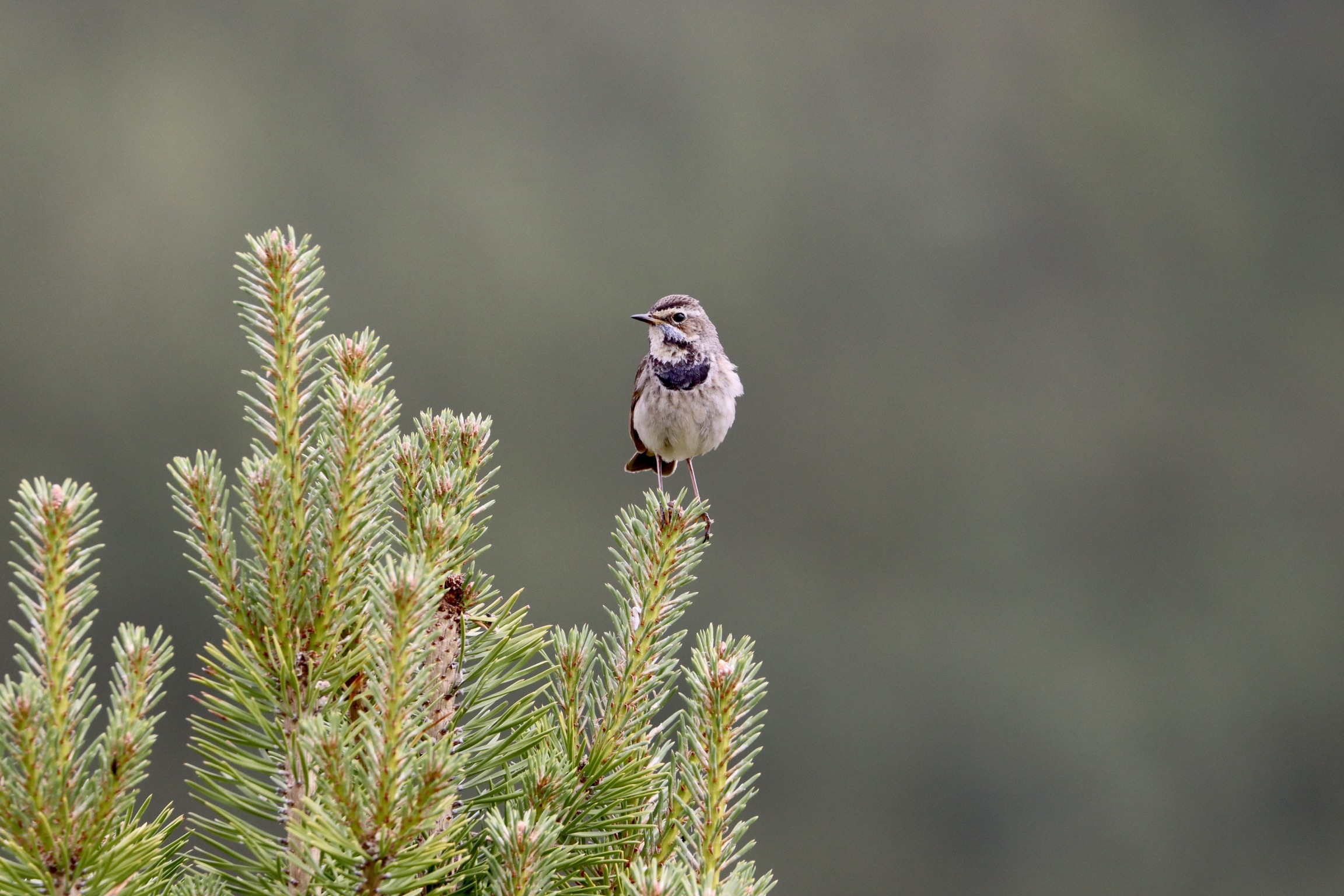
A male Bluethroat (blåstrupe) with food for young that were already out of the nest


Site for Alpine Emerald and also Azure Hawker (fjellibelle)

Male Northern Clouded Yellows (mjeltgulvinge)

And here a female

Another missed photo

And here a missed photo of a Pale Arctic Clouded Yellow (polargulvinge)


And again…. But there will always be another year and hopefully another camera lens


Saturday, 7 September 2024

Two ticks

This week has felt quite uneventful, but I have actually added yet another species to #Oslo2024 so am now just one precious species away from the mythical 200 and Maridalen has also bagged itself a new species which I twitched this morning.

The birding related highlight of the week was a very pleasant meeting with Five Bean Geese Gentlemen from Scotland who were on a trip to Sweden and Norway to see their geese on the staging grounds. It was my second time meeting Angus and Brian and first time meeting Carl, Billy and Rick. The same geese I had seen the previous week were all present and correct but on a rainy day and viewing from a busy road it was not exactly the most thrilling way to enjoy them.

The only picture I took of the Taiga Beans and their Scottish admirers

After Monday’s very uneventful wader searching trip to the islands it was a bit galling to see that there were a lot of birds seen the next day including my much wanted Ruff which was also present on Wednesday. I was close to going out to try to see it but found the prospect of twitching a Ruff, even in the pursuit of #Oslo2024, to be just a bit too much. I did double down on my own quest to find one though and have had my eye on a couple of damp fields in Maridalen as being possible places for the species to turn up. I walked out into one of these on Thursday and a wader flew up – not my hoped for Ruff but a new one for the year never the less – a Great Snipe! Again, a new species that I had not predicted. With this I am now on 199 for the year in Oslo and 210 must in fact be a possibility although I will then need to do drop my scruples about twitching birds like Ruff.

And the new species for Maridalen? It was perhaps the most glaring omission namely Moorhen . Found yesterday by someone not realising its significance it may have passed me by were it not for Jack alerting me last night. I didn’t exactly rush there this morning but did make my way there fairly directly once I was in action and luckily enough it was still present 😊

Maridalen Gold! Who would have thought that Gull-billed Tern would turn up before Moorhen (sivhøne) which becomes the 228th species in the valley and my 211th.

dragonflies haven't featured much this year but this Septemberlibelle (migrant hawker) was flying around close to the Moorhen. When I saw my first one in Maridalen in 2019 it was at the time the most northerly record in Norway of this recent colonist. I was expecting to find out that the species has subsequently expanded much further north but a check of records now seems to show Maridalen as still being the northern limit of its range

a few second generation Queen of Spain Fritillaries (sølvkåpe) are also on the wing now

Thursday, 4 July 2024

Beitostølen 2024

The summer holidays continue as per tradition with a week in Beitostølen. It is unusually wet and cold so my chances of seeing butterflies are going to be limited but I have made the most of any periods of sun. There seem to be very few butterflies here though this year which I hope is just a timing issue with more to come after some warm weather but that will unfortunately be after we have left.


On the bird front we managed a dry if cold walk on Valdresflye where I was very happy to see a couple of Long-tailed Skuas which had eluded us a month ago.


On the drive up we picked up my parents from Gardemoen airport. A delayed plane and hour long queues at passport control meant we suddenly had time to kill so a dog walk at Nordbytjernet beckoned. I hoped to see the Great Reed Warbler again although no luck on that score perhaps indicates it has moved on. It did however result in a news species of odonata with a very unexpected Blue-tailed Damselfly (kystvannymfe). As it Norwegian names suggests this is a coastal species in Norway and my records appear to be the furthest inland in the country.


Long-tailed Skua (fjelljo)


Although the presence of the skuas suggests tbere are some lemmings this Rough-legged Buzzard is the only raptor seen so far

Dotterel (boltit) is always a joy to find

Here, a Temminck’s Stint and two Ringed Plover (sandlo)

The Temminck’s

The same Dotterel as above - a female (the males will be sitting on eggs)


A female Bluethroat (blåstrupe) which clearly had young nearby


A Yellow Wagtail (gulerle) just out of the nest

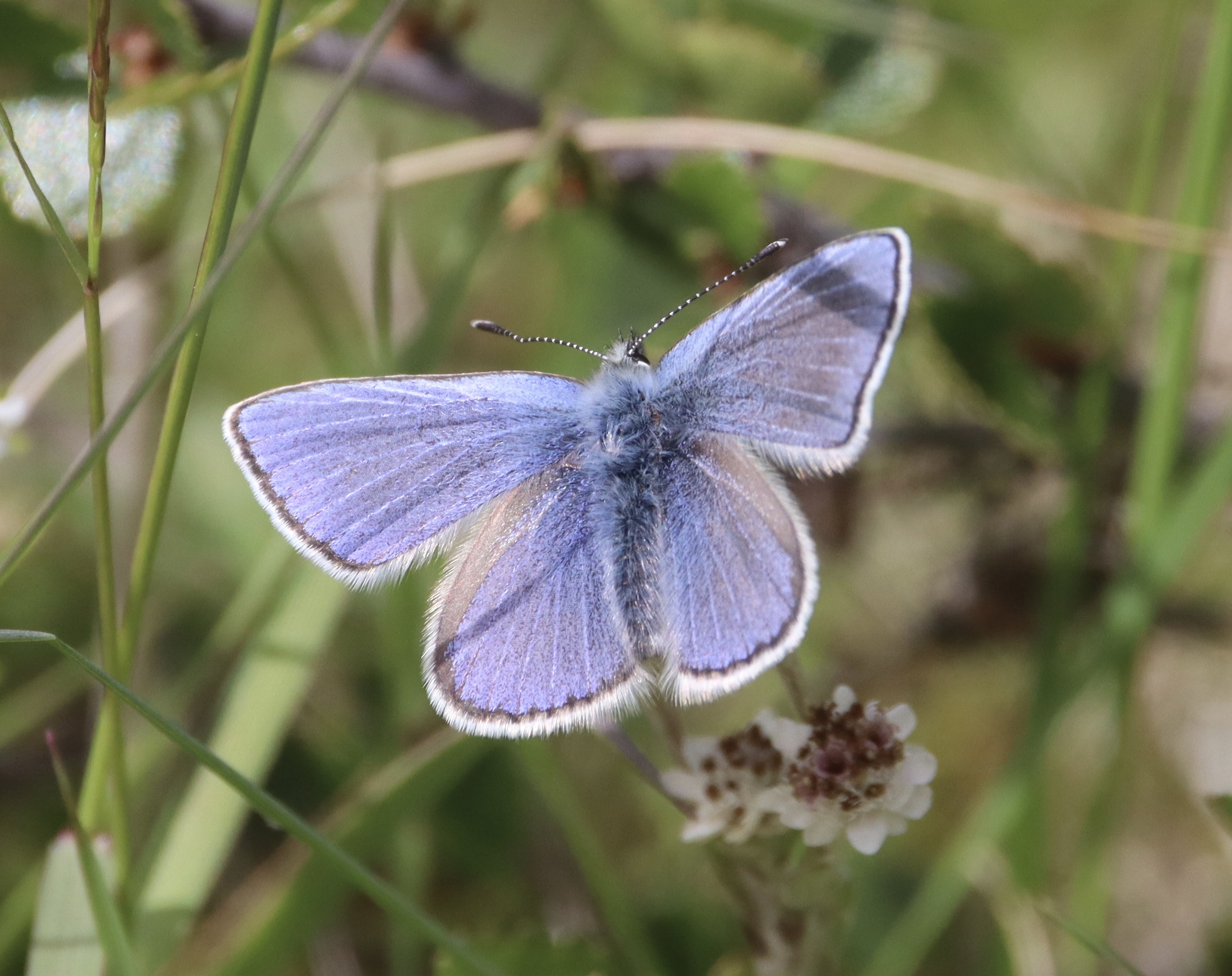
A male Common Blue (tiriltunge blåvinge)

And a male Alpine Blue (fjellblåvinge) - I’m not sure if the two species can easily be separated from above

From below though the Alpine Blues are distinctive

They have been the commonest butterfly up here (with over 100 at one locality)

Silver spotted Skipper (kommasmyger)


More mating Alpine Blues

Blue -tailed Damselfly (kystvannymfe)

A different individual


This was an interesting one. I assumed it was also a Blue-tailed with a strange pattern on the 8th tail segment

But here you see it must be a Variable Damselfy (fagerblåvannymfe) although quite an unusually marked one