The first 4 days of 2026 have been uneventful on the bird
front. We were away in Blighty for New Year and returned to snow and
temperatures approaching -10C but despite this, or perhaps because of this,
there is precious little to see.
Maridalsvannet remains stubbornly ice free
except for the bay at Nes with strong winds preventing the ice from spreading.
Our days in England were sans bins and camera but a
Firecrest in the garden allowed itself to recorded for prosperity on my phone
and a Red Kites were no problem to identify with the naked eye – both species I
would get very excited about in Oslo. Small groups of Redwings and Song
Thrushes were quite possibly birds that had bred in the Oslo area and were now
spending the winter in barmy Blighty.
Firecrest (rødtoppfuglekonge) - perhaps my best ever bird photo with my phone
Maridalsvannet on 2 January 2026
our flight to England on 28 December was uncomfortably early in the morning but did allow us to witness sunrise somewhere over the North Sea
best bird so far of 2026 in Oslo was this Jack Snipe (kvartbekkasin) although a later attempt to show Jack Jack was unsuccessful
Southerly winds overnight, rain in the morning and
the second half of May sounds like a guaranteed recipe for a rarity bonanza in
Oslo. The question was just where should I go to partake in this bird fest?
Nordre Øyeren would normally have been a fair bet but water levels are so high
now that there are no mudbanks although I did consider that flooded meadows may
produce some interesting birds. Maridalen is of course always a mega place for
birds 😉
but with the high water levels there aswell I discounted it for today. I did
seriously think about Gressholmen for the chance of a wader or two that is
missing from my Oslo list but in the end I decided on Østfold and Kurefjorden.
A decade or so ago (writing that makes me feel old..)
I regularly visited Kurefjorden and Brentetangen in May and often in the
company of Rune Zak and we had many good birds but the hour long drive has
become less and less appealing (I definitely am getting old!) and I’m probably
not even managing annual trips these days. There is a lot of promise in the
area though for both water birds and raptors so it felt like the best choice
for today.
As I drove down a message from Jack informed me that
he had chosen to go to Gressholmen and had found one of those waders that is
missing from Oslo list – Broad-billed Sandpiper aka Mountain Marsh Runner. Jack
had found the 3rd record for Oslo (all at Gressholmen) and a real
blocker. Should I change my plans?? Of course not! I am such a useless twitcher
that it would just end ruining what I had planned to be a seriously successful day.
The day had started very promisingly with an
Oystercatcher heard flying over the house (garden tick) whilst I lay in bed and
as I approached Kurefjorden I saw a Rook (year tick). Kurefjorden itself looked
with the tide and lighting seemingly perfect. There were lots of Greylag and
Barnacle Geese and Shelduck but my first sweep revealed little else. It just required
patience and thoroughness though and I had my own Mountain Marsh Runner
although the Østfold : Oslo exchange rate for this species exceeds 100 : 1. A Grey
Plover, 4 Dunlin, a Temmincks Stint and over 20 Ringed Plovers headed the wader
list and an Red-throated Pipit flying over calling was a big passerine
highlight. Raptors were scarce although an Osprey displayed over me and my
first Honey Buzzard of the year flew over. My eBird checklist can be seen here.
There were lots of young birds with Greylags and
Barnacle Geese having large young and at least 4 broods of Lapwing was a joyous
sight.
I checked out Nordre Ovenbukt expecting to find
Avocet or Black-winged Stilt but Lapwing were the only waders here with another
2 broods. A couple of Rook here were a big surprise and I wonder if the species
has started breeding in Østfold?
A drive through a lot of agricultural land without
finding a single raptor or Dotterel, or anything rarer.
My thoughts kept drifting to Gressholmen but I
remained strong and instead went to Jeløy where Firecrests look to be
establishing themselves as a breeding species. It took me a loooong time to
find one though although in the end I saw a male very well and the forest was
alive with the song of other species.
typically distant Broad-billed Sandpiper (fjellmyrløper) with a Ringed Plover (sandlo) which in my experience is the species it is most likely to turn up with on spring migration
singing Firecrest (rødtoppfuglekonge)
the first Rook (kornkråke) together with Jackdaws (kaie) and a Grey Heron
and the other 2
At the time I assumed this was one of the pair of birds but it seems to have more grey feathering so maybe is an additional bird
Stock Dove (skogdue) were nesting in the same wood as the Firecrest
Three days birding in Jæren including an early birders christmas dinner with 17 like minded folk was good for the body and soul.
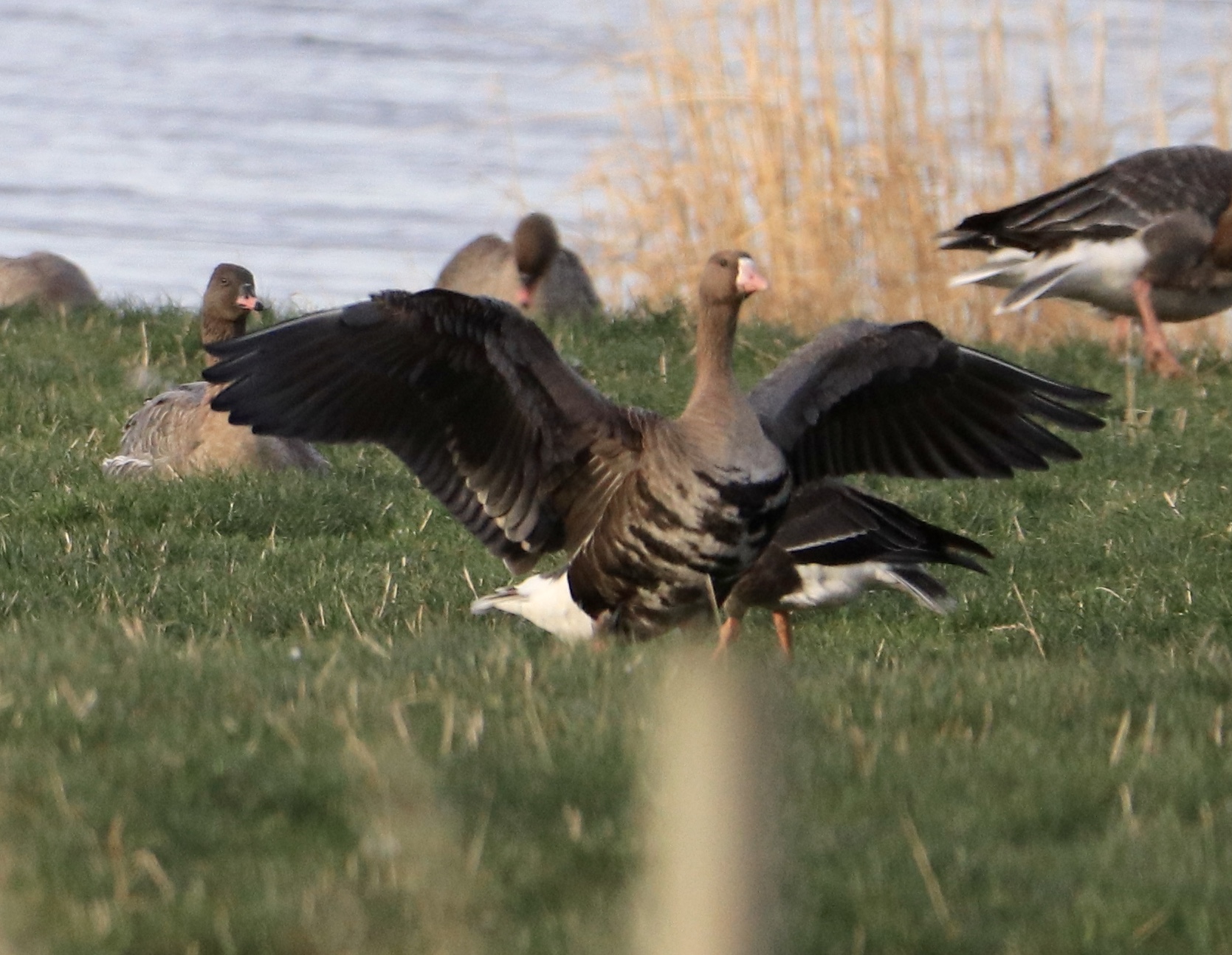
We had lovely blue skies and with winds from the east and the first heavy frost of the autumn Kjell was expecting a number of exciting birds to be pushed out to the coast. That wasn’t the case though and we found no rare wheatears or pipits but there was a large arrival of geese with many White-fronts and a few Tunda Beans alongside Pink-feets.
Rarest passerine was a Firecrest that we found and three different Stonechat was a sure sign that they have had a good year. I saw both Long- and Short-eared Owls, Hen Harrier and Rough-legged Buzzard. On the sea we had fantastic close views of Great Northern Divers and a single Little Auk was my first of the year.
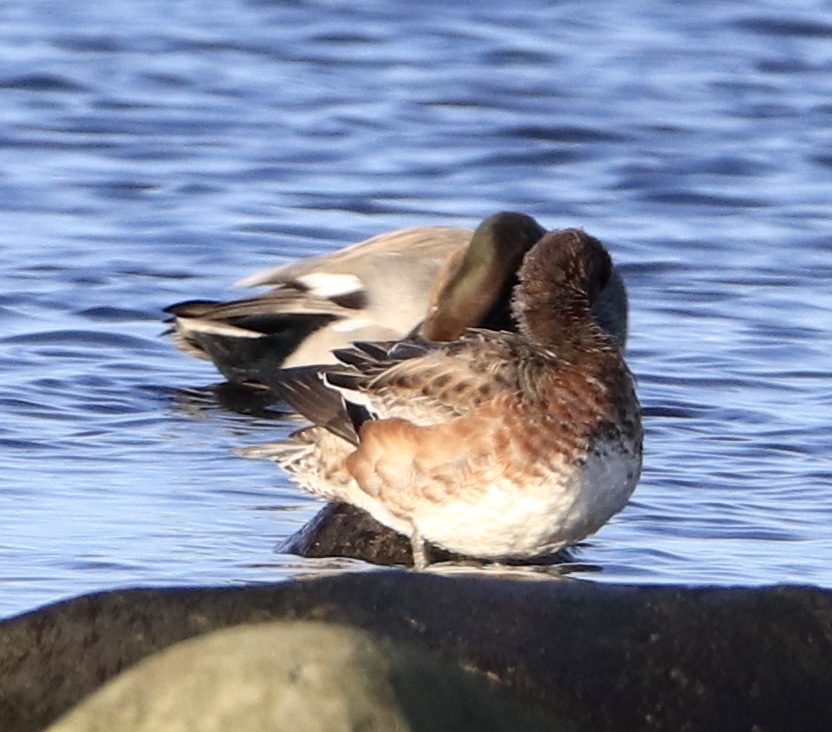
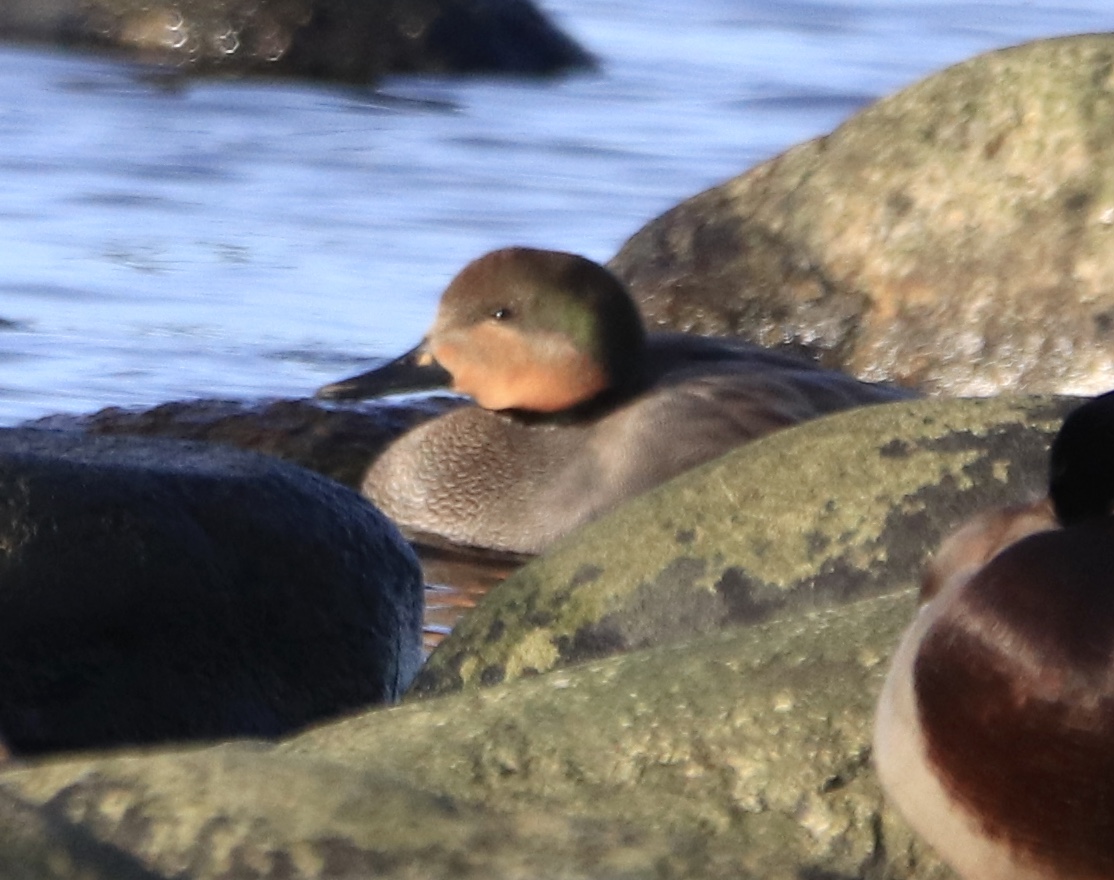
But was really strikes you with a trip to Jæren is the sheer number of birds. In addition to lots of geese the fields host large flocks of Starlings, thrushes and Lapwings and along the coast there were loads of ducks including a huge flock of 2000 Wigeon. Scanning this flock hoping to find American Wigeon revealed an incredibly smart Gadwall x Mallard hybrid. It was not a variety of this very variable hybird that I have seen pictures of before but I think the parentage must be right.
I am writing this on the plane home on my phone and I see that the pictures have been uploaded in a very random order so please forgive me.
Dark-belliwd Brent Goose (ringgås)
Tundra Bean Geese (tundrasædgås)
White-fronted Geese (tundragås)
The Gadwall x Mallrd hybrid (snadderand x stokkand) showing leg colour
Great Northern Divers (islom)
Dunlin (myrsnipe)
The hybrid duck
Parrot Crossbills (furukorsnebb)
Hybrid duck
White-fronted and a few Greylag Geese (and possibly others)
Male Stonechat (svartstrupe)
The only shot I got showing some of the wing pattern of the hybrid duck
Female Stonechat
Great Northern Diver still mostly in summer plumage
Hybrid duck
Wigeon (brunnakke)
A very late Northern Wheatear (steinskvett)
A heavily barred adult european White-fronted Goose
Little Auk (alkekonge)
The Brent Goose showing its dark belly
Great Grey Shrike (varsler) - apparantly rarer here than in Maridalen
Short-eares Owl (jordugle) - my only sighting this year
A better picture of the very smart hybrid Gadwall x Mallard