The autumn arrival of auks has always been one of the
notable events of the Oslo birding calendar. The last few years though there
have not been that many and Little Auks have been more or less absent. This has
been due to a lack of strong southerly winds to push birds up the fjord which is
also the reason for a lack of almost any other exciting seabirds. This autumn
we had a small arrival of Guillemots at the end of September and probably a few
new birds since then but there are just a handful of Razorbills amongst them. These
small numbers are the result of a lack so far of any strong winds to drive the
birds north so it has been surprising to find birds on Maridalsvannet. What I
assume happens is that the birds have problems when trying to return to open
seas and end up flying higher and higher and around and around trying to find
their way out of the Inner Oslofjord and some end flying north as a part of
this endeavour. This would help explain why I found a LITTLE AUK on
Maridalsvannet yesterday despite there being no wind at all. This is my first record here and my only new species in the Dale so far in 2025.
Since Sunday there
have been a lot of Little Auks turning up on the fjord. They have been flying
north over calm seas and are clearly very lost. My theory is that storms
associated with Amy displaced many Little Auks from areas further north and
into the southern North Sea. These birds are trying to return north from whence
they came and if they were far enough east then they will end up in the Oslofjord
and if they continuing flying north despite the ever narrowing fjord they will
hit Oslo City. Yesterday morning I was watching from Fornebu and saw a steady
stream of birds arriving from the south and then flying around confused in
circles and clearly one of these birds just decided to not stop and continue
heading north before then seeing just forest and deciding Maridalsvannet would
be a good place to abort the northward flight and contemplate its choices in
life.
No other species are turning up on fjord so the movement is
restricted to Little Auks although I have a hope a Puffin may also turn up.
Fornebu is getting very quiet with just a Kingfisher to
liven things up and apart from auks Maridalen has had the first Pygmy Owls
turning up which as usual coincides with the first heavy frosts further into
the forests.
The fact I am writing about Auks in Oslo clearly means that
I haven’t travelled to Værøy. Kjell has gone up but his messages today have not
had me feeling jealous with not a wing bar or scarce bird in site. He does have
two more days though… and I wish him luck but not too much.
Little Auk (alkekonge). They do not seem to be scared of people at all and also often feed (dive) right by the shore meaning they can offer great views
look at the legs right at the back of the body
a group heading north with the Oslo - Nesodden ferry in the background
here a group flew in a circle around Lysakerfjorden and were at one point flying over land
here with the offices at Fornebu in the background
they returned to the fjord and flew right past me
before all 15 landed right in front of me. They were calling which can be heard in the video above
the Maridalen bird. Completely unidentifiable in this photo but with a landmark in the background
a Razorbill (alke)
Guillemot (lomvi) and Razorbill together
this Guillemot was hoping I had a fish for it
here it almost felt like it was performing so as to be rewarded with a fish
and my first Pygmy Owl (spurveugle) of the autumn in Maridalen
Little Auks have been difficult birds to see around
Oslo the last few years. Previously I would consider it an expected species in
late autumn/early winter but a lack of southerly storms at this season has not
seen many birds being blown in the last few years. I did not see one at all
last year in Oslo so when a bird was found offshore downtown at the weekend and
was still there yesterday then I had to go look for it. It was a particularly confiding
bird that had a clear clockwise circuit that it followed and would regularly dive
long distances. It would also swim underneath the edge of the dock making it at
times impossible to see although one could be standing on top of it.
Otherwise, we have quite a bit of snow which is very
scenic but has, especially in Maridalen, resulted in birds seemingly
disappearing and birds can be few and far between.
Little Auk (alkekonge) - it came a bit too close!
it would swim around the edge of a bay and then cross back over to the otherside
before swimming under the docking
and would occasionally pop into view but would always continue its clockwise circuit
before suddenly revealing itself on the otherside
there are still quite a few Waxwings (sidensvans) about
I bumped into the adult (ringed) Wigeon (brunnakke) again today
there are still 10 Bearded Tits (skjeggmeis) at Fornebu and there are at least 7 in this picture
a Roe Deer in a snowy Maridalen. I had 5 mammal species today, with in addition Red Squirrel, Fox, Common Seal and a Dolphin sp
Three days birding in Jæren including an early birders christmas dinner with 17 like minded folk was good for the body and soul.
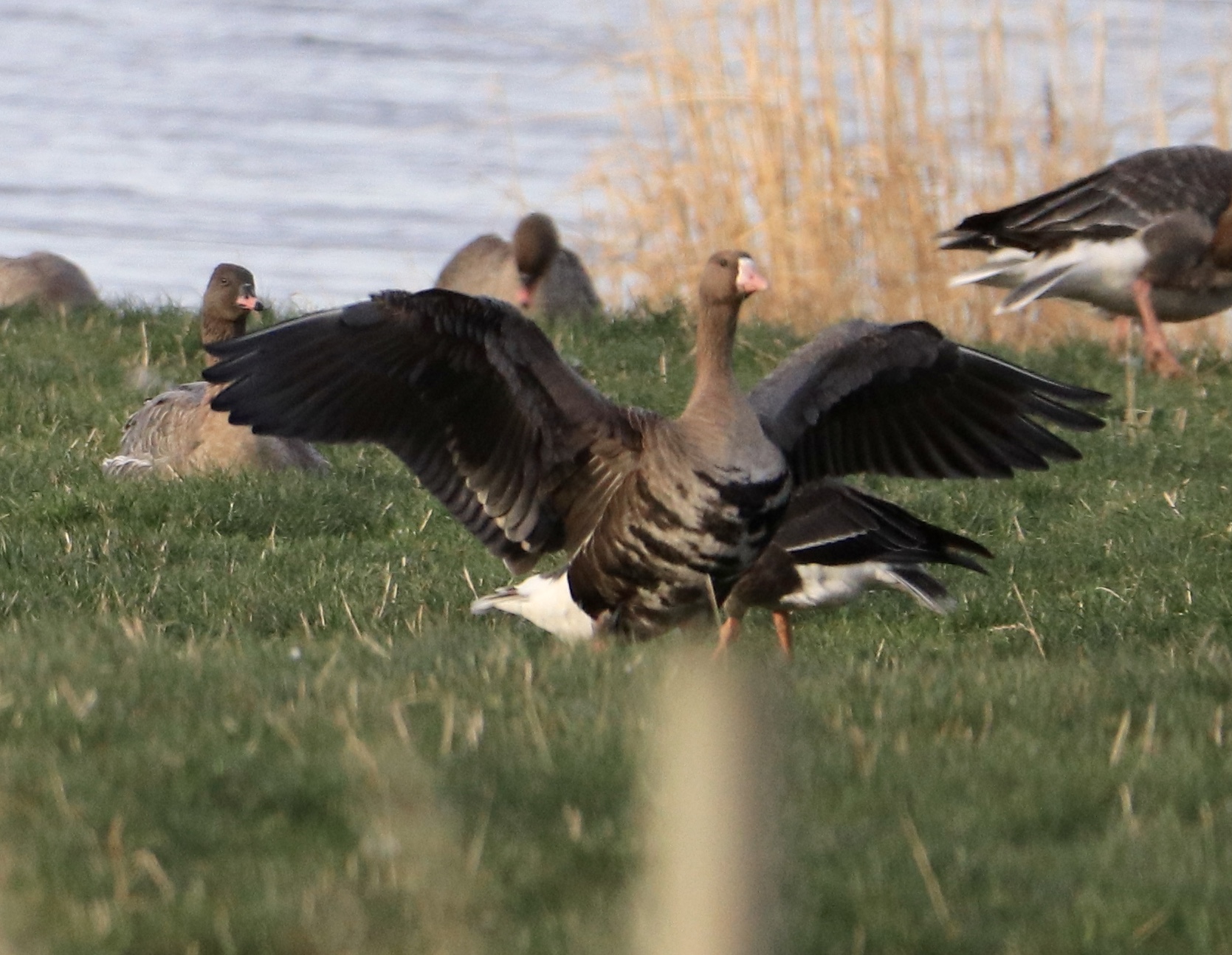
We had lovely blue skies and with winds from the east and the first heavy frost of the autumn Kjell was expecting a number of exciting birds to be pushed out to the coast. That wasn’t the case though and we found no rare wheatears or pipits but there was a large arrival of geese with many White-fronts and a few Tunda Beans alongside Pink-feets.
Rarest passerine was a Firecrest that we found and three different Stonechat was a sure sign that they have had a good year. I saw both Long- and Short-eared Owls, Hen Harrier and Rough-legged Buzzard. On the sea we had fantastic close views of Great Northern Divers and a single Little Auk was my first of the year.
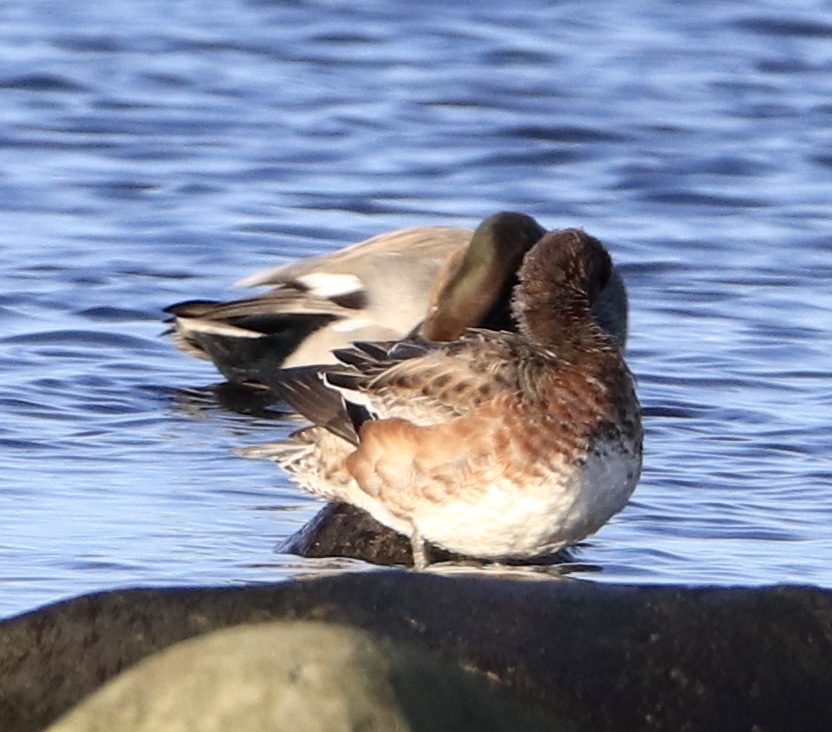
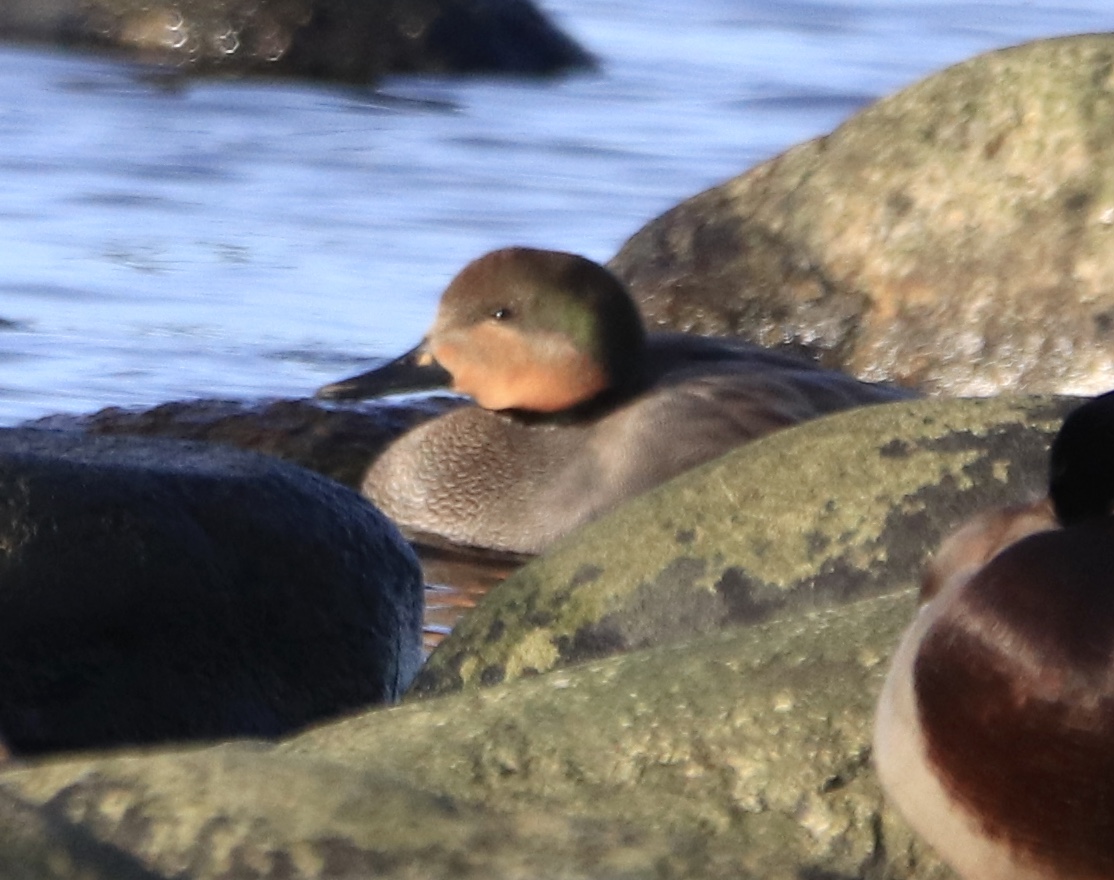
But was really strikes you with a trip to Jæren is the sheer number of birds. In addition to lots of geese the fields host large flocks of Starlings, thrushes and Lapwings and along the coast there were loads of ducks including a huge flock of 2000 Wigeon. Scanning this flock hoping to find American Wigeon revealed an incredibly smart Gadwall x Mallard hybrid. It was not a variety of this very variable hybird that I have seen pictures of before but I think the parentage must be right.
I am writing this on the plane home on my phone and I see that the pictures have been uploaded in a very random order so please forgive me.
Dark-belliwd Brent Goose (ringgås)
Tundra Bean Geese (tundrasædgås)
White-fronted Geese (tundragås)
The Gadwall x Mallrd hybrid (snadderand x stokkand) showing leg colour
Great Northern Divers (islom)
Dunlin (myrsnipe)
The hybrid duck
Parrot Crossbills (furukorsnebb)
Hybrid duck
White-fronted and a few Greylag Geese (and possibly others)
Male Stonechat (svartstrupe)
The only shot I got showing some of the wing pattern of the hybrid duck
Female Stonechat
Great Northern Diver still mostly in summer plumage
Hybrid duck
Wigeon (brunnakke)
A very late Northern Wheatear (steinskvett)
A heavily barred adult european White-fronted Goose
Little Auk (alkekonge)
The Brent Goose showing its dark belly
Great Grey Shrike (varsler) - apparantly rarer here than in Maridalen
Short-eares Owl (jordugle) - my only sighting this year
A better picture of the very smart hybrid Gadwall x Mallard