I write this on the last day of April and therefore the day
before my favourite birding day of the year – 1 May. This day may not
statistically prove to be that great but it is a national holiday and I
will always be in Maridalen from dawn following the migration. What will turn
up tomorrow? Red Kite? Black-shouldered Kite?? Pygmy Cormorant???.
Since my last post I have added the following to Oslo 2024:
Greenshank #145, Pied Flycatcher #146 and Whinchat #147. So, 150 is definitely
a possibility before the end of April. When I first started noting my Oslo list
I thought 150 for the whole year was a good result!
Migration is delayed this year so we could have some good
days ahead of us but unfortunately there is no rain forecast and just lots of
sun so there will be no big falls of migrants.
In the Dale the swan drama has now settled down with the
Whooper Swans on the nest and presumably incubating whilst the Mutes are on the
other side of the lake. I cannot wait (a month) to see if the eggs hatch.
The male Three-toed pecker was still excavating the nest
hole today and hasn’t come very yet. The entire chamber will probably take him
a couple of weeks.
Svellet is looking scrumptious and now the birds just need
to come. 25 Greenshank today was a 400% increase on the day before so it can
just keep on going like that for a few days and we will all be happy.
variety in the Dale - Common Sand (strandsnipe), Green Sand (skogsnipe) and White Wag (linerle)
Golden Plovers (heilo) at Årnestangen
my first Oslo Greenshank (gluttsnipe) of the year!
I was as surprised as the Snipe (enkeltbekkasin) when I came around a corner and we made eye contanct
the male Three-toed Woodpecker (tretåspett) has not come that much further with his nest hole building
my first toad of the year
first Whinchat (buskskvett)
and first Yellow Wag (gulerle) although not in Oslo yet. A male thunbergii
I haven’t finished going through all my pictures
from my memorable 24 hour trip last week so here is an update from Oslo.
The last Lapwing nest in Maridalen finally hatched yesterday.
The female was still sitting in the morning but late afternoon she was off the
nest and two tiny young were crouched there and she soon returned and sat on
them and the remaining two eggs. I wonder if I will see them again. In the same
field was one more half grown young and 4 other adults who may have had child
care responsibilities.
A nocturnal trip around the Dale with Jr on Friday
night revealed begging Tawny Owl young and a visit the next day found them with
a watchful mum nearby. A single youngster was still in the nest but two much
older ones were sitting together high up in a spruce watching us.
I had 3-4 Marsh Warblers and also heard the
beautiful tones of a (Thrush) Nightingale but in the end concluded it was a mimicking
Marsh Warbler as there was only ever a short element of song and it came from
exactly the same area as a Marsh W was singing. It was however quite a way away
and there were loud parties going on at seemingly every farm that evening so
hearing birds was quite a challenge.
On the bug front I have two (for me) significant observations.
First, I finally paid a visit to the only known locality in Oslo for the rare
Lilypad Whiteface dragonfly (vanlilljelibelle) which was successful with 3
males sitting on…lilypads and on the way to their favoured forest pond a large
shadow passed over me and my first proper views, and eventually photos, of a
Poplar Admiral (ospesommerfugl) were a factum. This has been a long time coming
but was an all too brief encounter.
I have also discovered a large population of Broad-bodied
Chasers (blåbredlibelle) which shows that the species has colonised Oslo and
done so very quickly when you consider there were only 10 records before this
year. In addition to having the species in Maridalen an area of marshland that
the council restored in 2021 in the forest of Lillomarka had at least 17 when I
visited on Thursday.
mum and a more than half grown Lapwing (vipe), let us hope all the other young and well hidden in long grass which is why I can't find them
Tawny Owl (kattugle) mum on watch
two fairly large young which clearly can fly/climb well enough to get high up a tree
but one young hadn't left the nest box yet
Lilypad Whiteface dragonfly (vannliljelibelle)
e
and with a Large Redeye damselfly (rødøyevannymfe)
and my first proper sighting of a Poplar Admiral (ospesommerfugl) flying along a shady forest track
before briefly stopping
and on my return I found it or the same one perched high up in a tree
Broad-bodied Chaser (blåbredlibelle)
a far more eye catching beast from above
the restored march where the chaser and may other dragons and damsels were. This original marsh had been drained and commercial spruc planted many decades ago but the council removed all the trees and dammed up the drainage ditches and a great marsh is redeveloping. Green Sandpipers also breed here
judging by the noise this Green Sandpiper (skognsnipe) was making there must have been young nearby
Easter birding in Maridalen saw the number of
species increase each day and on Sunday morning I recorded 60 species https://ebird.org/checklist/S133145962
With no overnight frosts and some rain the snow is disappearing
although surprisingly slowly and the lake will remain frozen for a number more
weeks. A number of new species have turned up including Teal, Green Sandpiper,
Ring Ouzel and Twite and I have exceptionally (and therefore unrealistically)
high expectations for tomorrow and feel certain a Red Kite will turn up…
In addition to Maridalen I have also headed east and
visited the Taiga Bean Geese who had the company of 5 White-fronted Geese.
There were also lots of Cranes and Whooper Swans in the area but raptors were
much scarce than I expected. Two Marsh Harriers were my first of the year though.
Cranes (trane) and Whooper Swans (sangsvane)
Great Grey Shrike (varsler) in Maridalen which I believe to be the wintering bird rather than a spring migrant
my first Green Sandpiper (skogsnipe) for 2023 found only icy margins in Maridalen
open water where the Dausjøelva river enters Maridalsvanet
Moose
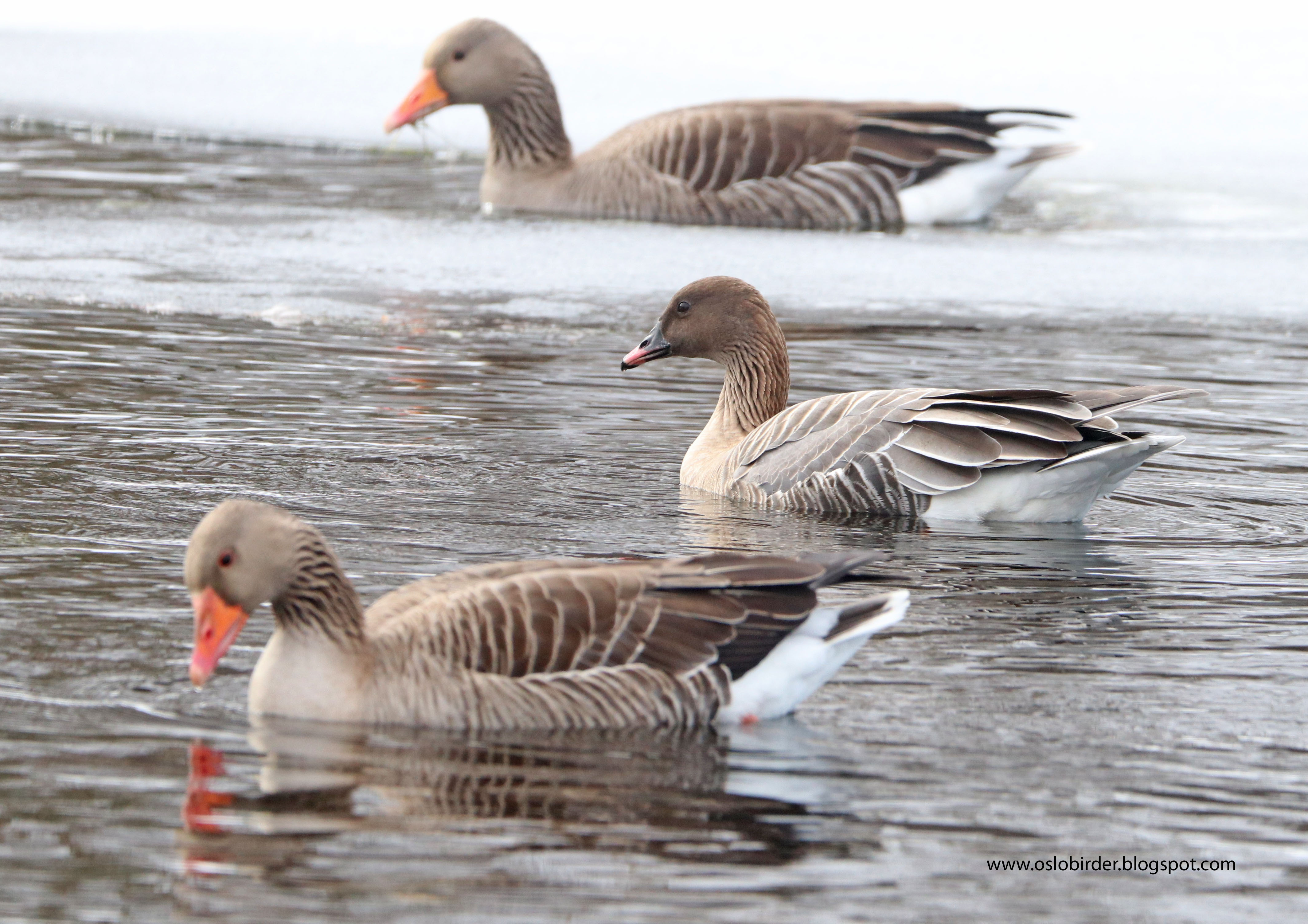
I have seen a number of flocks of Pink-footed Geese (kortnebbgås) migrating over Maridalen but this was the first bird on the lake. Together with a couple of Greylags (grågås)
female Sparrowhawk (spurvehauk)
Taiga Bean Geese (taiga sædgås) with a couple of Pink-feet
Twite (bergirisk) in Maridalen
White fronted Geese (tundragås) . 3 adults with extensive black belly barring and 2 young birds
my first Golden Plovers (heilo) of the year deserve a photo no matter how bad it is
male Marsh Harrier (sivhauk). He was calling although I never saw him together with the female