Well, that was Wednesday.
It
is still early in the autumn migration for adult birds and the end of July
should be a lot better.
I have no pictures from today but have this from a walk in the forest last week.

Well, that was Wednesday.
It
is still early in the autumn migration for adult birds and the end of July
should be a lot better.
I have no pictures from today but have this from a walk in the forest last week.
As a wise (apparently) man once said «you have to be in it
to win it». My hopes for yesterday it turned out were not misplaced just mis-timed.
Halvard visited Gressholmen 6 hours after me and had double digit counts of
both Wood Sand and Redshank and visitors to Årnestangen had a good selection of
waders despite high water levels meaning hardly any exposed mud.
I therefore put the additional disappointment of the
football behind me and decided to give Gressholmen another chance. I didn’t
wake until 08:30 so hopefully the extra sleep would leave me mentally stronger
to face the rejection that was sure to meet me. But, hey, maybe Gressholmen
rewards persistence?
If she does reward persistence then it may be more than I can offer. At least a Redshank had joined its Green cousin and there were 2 Dunlin resting on rocky islets (not feeding on the mudflats) but I clearly need to reassess this relationship. The fact that I was not the only birder (we were three) who has been taken in by Gressholmen’s seductive promises perhaps makes me feel a bit less foolish..
Wednesday??
 |
| the view from Lindøya looking north with rain over Oslo. Perfect conditions you (I) would think for a wader fest. The rocks in the water are Galteskjær where there was at least a Dunlin |
 |
| this photogenic Common Tern (makrellterne) was the only bird I took a photo of |

 |
| note that the tip of the upper mandible is broken, perhaps from hitting a stone whilst diving for food? |

 |
| the island which 5 days ago had nesting Black-headed Gulls and Common Terns now only had these two pairs of Common Terns which were not necessarily nesting. There are still plenty of feeding adult Common Terns around but I am not sure where or if they are nesting. In Nordre Øyeren a couple of days ago I saw already fully fledged young |
 |
| A new species in Maridalen! This Cockatiel had be braking to a screeching halt but will not be featuring on any lists. It was calling a lot and clearly not quite at home |
 |
| Red-backed Shrikes (tornskate) haven't been very showy this summer in Maridalen but have young to feed now and are more obvious |
I have known Gressholmen for over 20 years and have a
strained relationship with her. From my side it is characterised by naïve optimism
that keeps me hoping that we have a future together but also a vulnerability that
makes me promising to avoid her after yet another of her frequent rejections. I
do not have the strength to leave her though and find myself returning again and
again to only leave hurt and humiliated.
We have had some good times together and it is the memories of these that keeps me going back for more. Wednesday's successful visit fueled up the naïve optimism tanks and I was up again at 06:30 this morning buoyed by a forecast of rain and north easterly winds. It was definitely raining and I was wet enough but what was my payback? A single Greenshank….. Will I leave her? Hell, no!! There is rain forecast again on Wednesday and I have #Oslo2024 to consider 😌
 |
| the ferry arriving just before 07:30 and my naive optimism is at maximum |
 |
| arriving at the tidal bay to find just a single Greenshank - feelings of vulnerabilty and rejection max out |
The second half of the week in Beitostølen added a few new
birds with a 2cy male Hen Harrier and Siberian Jays the highlights. I had
another sighting of a Long-tailed Skua and 9 Rough-legged Buzzards one day with
7 in one sweep of the horizon. They were all hunting and I saw 2 take small
rodents so it looks like rodent numbers may be on the way up.
Back
in Oslo dog walks resulted in nice views of Purple and White-letter Hairstreaks
with the later nectaring on a thistle which is the first time I have seen this.
 |
| this male Lapland Bunting (lappspurv) was singing in exactly the same place as the beginning of June and was probably unpaired |
 |
| a Long-tailed Skua (fjelljo) showing off its amazing tail |
 |
| a Meadow Pipit (heipiplerke) which clearly had young nearby |
 |
| a Scarce Copper (oransjegullvinge) - note the tiny rip in the wing. |
 |
| Roughlegged Buzzard (fjellvåk) |
 |
| and another one |
 |
| a 2cy male Hen Harrier (myrhauk) in exactly the same place I saw a male Pallid Harrier in July 2017 |
 |
| Shore Lark (fjellerke) |
 |
| Slavonian Grebe (horndykker) pair with 3 young. This is the first registered breeding in the Beitostølen area although I have long expected to find them on this lake |
 |
| a female Teal (krikkand) with 4 young |
 |
| The Beast is now a learner driver |
 |
| fresh snow fell over about 1700m one morning |


 |
| a Purple Hairstreak (eikestjertvinge) on an elm |
 |
| as it was on an elm I first thought it would be a White-letter but I don't think they ever rest with their wings open which Purple's do frequently |
 |
| and a White-lettered Hairstreak (almestjertvinge) on a thistle |

Back in Oslo only a couple of days and my reading of the weather lead me to believe that I would have a good chance to increase #Oslo2024. North easterly winds and a day of rain on Wednesday are about as perfect as you can get to dump down some early autumn migrant waders. A quick stop at Svellet after dropping the Seniors off at the airport revealed 130 Dunlin and a few other waders so I was really looking forward to heading out to Gressholmen on the first, 07:30, boat this morning.
I arrived 3 hours before high tide in overcast conditions
and felt confident I would at least see Redshank… And indeed I did with 17
birds, Oslo#187, being the highest autumn count for Oslo. 8 Dunlin, a
Greenshank and best of all a Knot, Oslo#188, were also great birds. All of
these were of course summer plumage adults and the Knot is the first time I
have seen that plumage in Oslo.
Local breeding Oystercatchers and Ringed Plover which had at least one half grown young added to the waders fest.
I studied the rocky islet of Galteskjær as best as I could
from the ferry hoping to turn up a Turnstone but 4 Dunlin and 2 Ringed Plover
were fairly good substitutes.
I still have some blogging to do from the end of the week in
Beitostølen and first days back in Oslo (hairstreaks) and will get that out
soon.
 |
| arriving at Gressholmen at 07:48 I was the only one getting off the ferry but two people were leaving the island |
 |
| the muddy bay which often is empty of waders but today held 5 species |
 |
| summer plumaged Dunlin (myrsnipe) and Knot (polarsnipe). An unusual sight in Oslo |

 |
| the Knot with Redshank (rødstilk) behind |
 |
| when an adult Ringed Plover (sandlo) flies noisily towards you, lands and then runs off then you know there are young nearby |
 |
| I saw this half grown young but the parents behaviour suggested there were more |
 |
| 11 of the 17 Redshank |
 |
| and some of them on the deck |
 |
| Ringed Plover and Dunlin feeding on Galteskjær |
 |
| and the Dunlin on Gressholmen |
 |
| my Oslo year list is now at 188. The 191 from 2019 looks a certainty now but will I reach 200? |
 |
| a small colony of Black-headed Gulls (hettemåke) and Common Terns (makrellterne) was on a small islet. There were fledged gulls and adults still seemingly on eggs |
 |
| the terns though did not have young and some seemed to have yet to start nesting |


The summer holidays continue as per tradition with a week in Beitostølen. It is unusually wet and cold so my chances of seeing butterflies are going to be limited but I have made the most of any periods of sun. There seem to be very few butterflies here though this year which I hope is just a timing issue with more to come after some warm weather but that will unfortunately be after we have left.
On the bird front we managed a dry if cold walk on Valdresflye where I was very happy to see a couple of Long-tailed Skuas which had eluded us a month ago.
On the drive up we picked up my parents from Gardemoen airport. A delayed plane and hour long queues at passport control meant we suddenly had time to kill so a dog walk at Nordbytjernet beckoned. I hoped to see the Great Reed Warbler again although no luck on that score perhaps indicates it has moved on. It did however result in a news species of odonata with a very unexpected Blue-tailed Damselfly (kystvannymfe). As it Norwegian names suggests this is a coastal species in Norway and my records appear to be the furthest inland in the country.
 |
| Long-tailed Skua (fjelljo) |


 |
| Although the presence of the skuas suggests tbere are some lemmings this Rough-legged Buzzard is the only raptor seen so far |
 |
| Dotterel (boltit) is always a joy to find |
 |
| Here, a Temminck’s Stint and two Ringed Plover (sandlo) |
 |
| The Temminck’s |
 |
| The same Dotterel as above - a female (the males will be sitting on eggs) |

 |
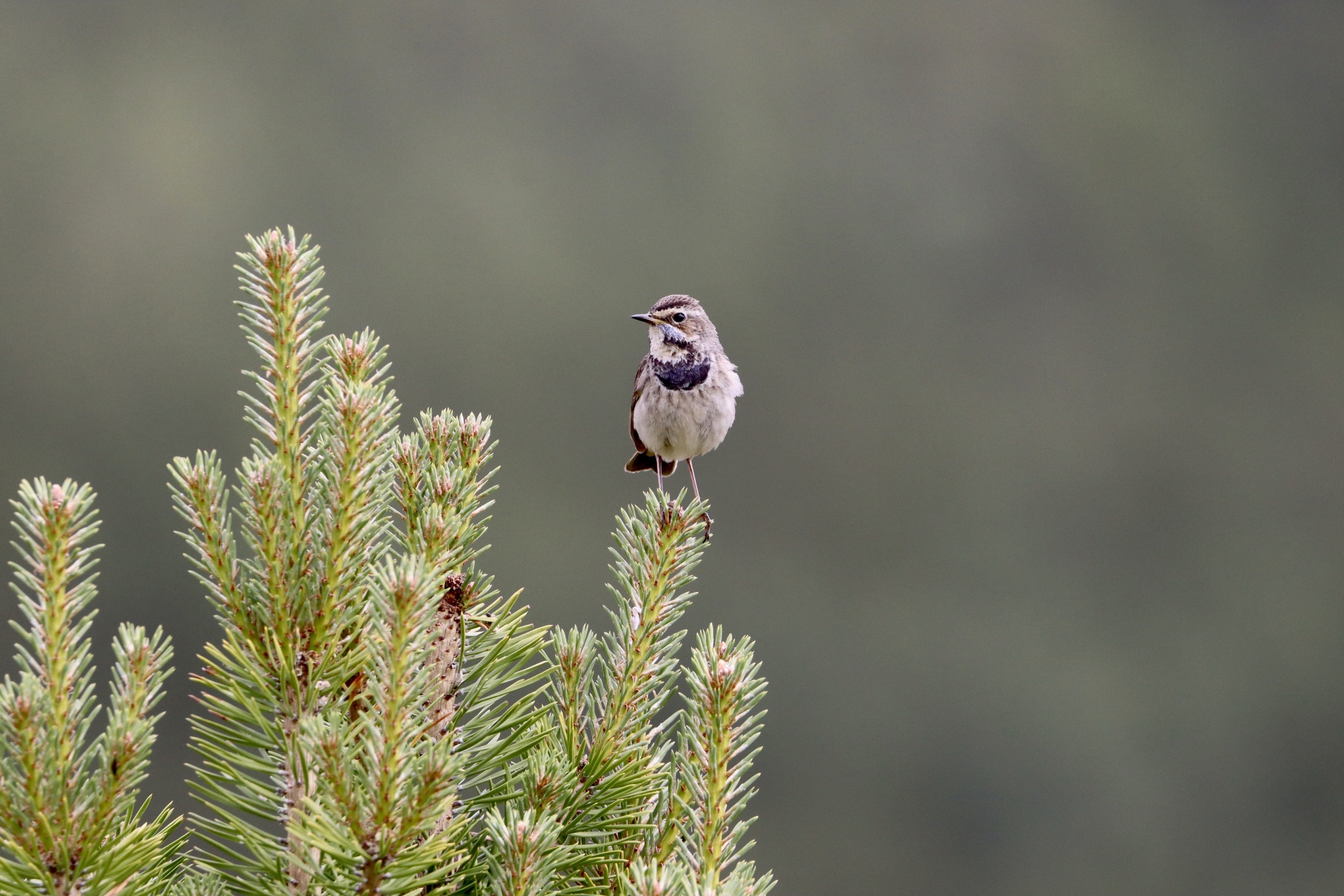
| A female Bluethroat (blåstrupe) which clearly had young nearby |
 |
| A Yellow Wagtail (gulerle) just out of the nest |
 |
| A male Common Blue (tiriltunge blåvinge) |
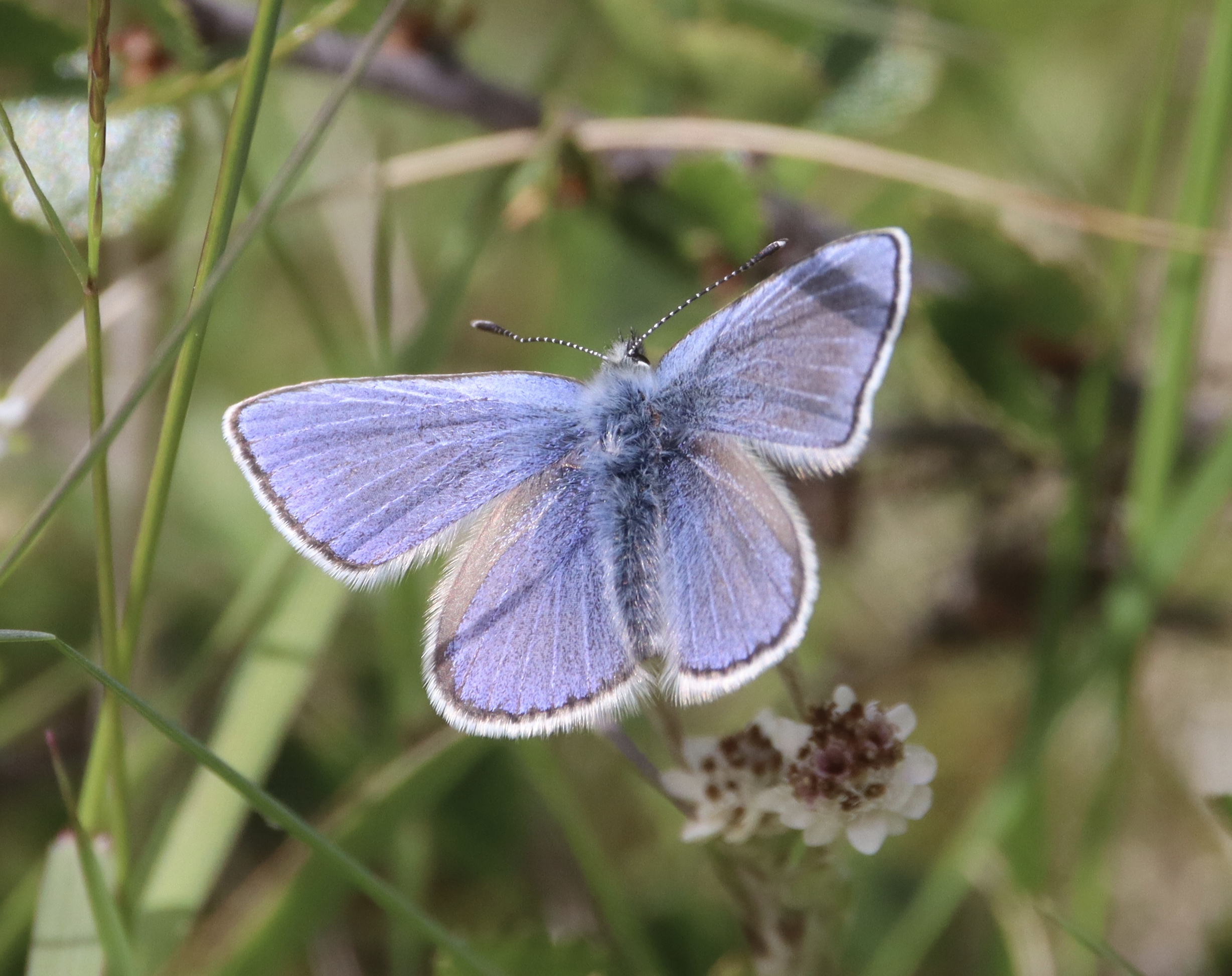 |
| And a male Alpine Blue (fjellblåvinge) - I’m not sure if the two species can easily be separated from above |
 |
| From below though the Alpine Blues are distinctive |
 |
| They have been the commonest butterfly up here (with over 100 at one locality) |
 |
| Silver spotted Skipper (kommasmyger) |

 |
| More mating Alpine Blues |
 |
| Blue -tailed Damselfly (kystvannymfe) |
 |
| A different individual |

 |
| This was an interesting one. I assumed it was also a Blue-tailed with a strange pattern on the 8th tail segment |
 |
| But here you see it must be a Variable Damselfy (fagerblåvannymfe) although quite an unusually marked one |

