Yesterday was a bank holiday in Norway and Jr and I used it to take a looooong drive. She takes her driving test on Monday and is keen to get in driving practice and I have places I want to bird but no longer find the long drives much fun. It is therefore a win win if I get chaffeured and Jr gets the practice she wants. We were out 13 hours and clocked up just shy of 600km. The destination was a first trip to the mountains for the year. Not Beitostølen / Valdres but Ringebu which I have developed a taste for.
First stop was to check out a Tengmalm’s nest that Per Christian and I had discovered in April. No bird showed and I am really beginning to think it is my trunk scratching technique that is the problem rather than there never being owls in the holes. A very small and rare butterfly was a good compensation though with a few violet copper (fiolett gullvinge) on the road verge. I have previously found a very healthy population a couple of kilometres away and this very normal looking area of open pine forest clearly holds good numbers of what otherwise seems to be a declining species.
After this we headed higher and above the tree line. There was no snow but it was all very brown and the birches on the tree line were yet to come into leaf. The lake and marshes I was headed for were ice free and there were quite a few birds but clearly a number of migrants are not back yet. Although there were fair numbers of Yellow Wagtails and Meadow Pipits I found no Bluethroats, Lapland Buntings or Wheatears which should be numerous. There were also no raptors, owls or grouse so it is clearly not a rodent year in these mountains.
Waders were back though. My target was Red-necked Phalarope and two pairs were probably only just in. Redshank, Wood Sandpipers, Golden Plover were also all on territory and there were 3 or 4 calidris waders in song flights at some distance that gave me a bit of a headache. When I initially heard the «song» I identifed them as Broad-billed Sandpipers but then I started hearing Dunlin and a Dunlin landed close to me. I assumed they were all the same species as they were flying around together and then started thinking I had misheard and they were all Dunlins.
Lucky though I did take some terrible distant photos and there were clearly both species flying together. I now wish I had walked further into the marshes (my feet were already wet anyway) and tried to see them properly.
After this we needed to get some food and headed for Elverum where after a McD we then visited Norway’s only known singing Ortolan and then the GGOs. This time we had to wait over an hour for a feed but it was fun watching mum and the young getting increasingly hungry and impatient. Then driving home we had a roadside GG hunting in someones garden 😊
Today, a post on Facebook reminded me that it was about time I twitched a butterfly. Scarce Heath (heroringvinge) is rare in Norway but occurs on a couple of islands (one of which is connected to the mainland) only 6km from Fornebu. They were easy to find and the habitat - some open ground backing onto gardens - looked very ordinary. This species seems to be extremely sedentary and although it can be well established in one small site seems unable to expand onto other sites just a few hundred metres away.
I’ll post pictures now and will come back with videos which should be good although knowing me I will have failed to press the record button when I thought I had.
 |
| a male Red-necked Phalarope (svømmesnipe) |
 |
| and a female. This is one of the very few species where the female is the more colourful of the sexes |
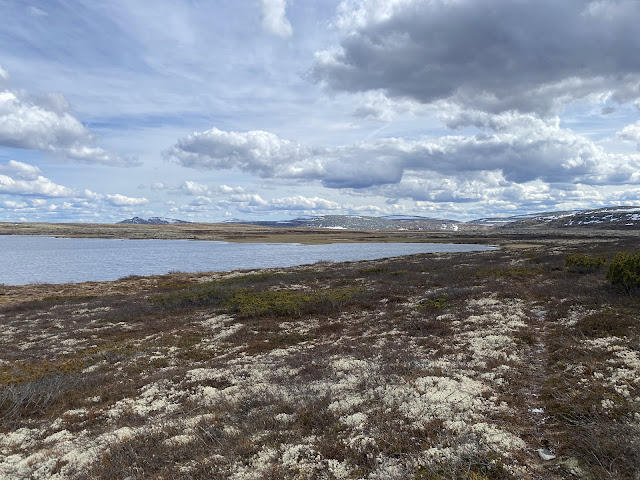 |
| habitat |
 |
| Dunlin (myrsnipe) and Broad-billed Sandpiper (fjellmyrløper). I regret now not trying to get closer to the area they were displaying over |
 |
| size difference is just about possible to make out |
 |
| Norway's only known singing Ortolan Bunting and the same bird I found on 10 May. Nothing suggested he had found a mate |
 |
| Great Grey Owl (lappugle) watching. I should have some good video |
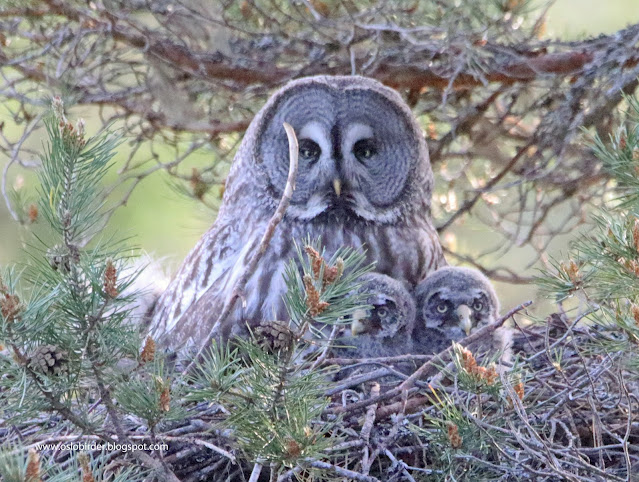 |
| the three young are growing and the two oldest are now grey instead of white. The third and smallest is just visible to the left of the other two behind the branch |
 |
| one young was hiding under mums wing |
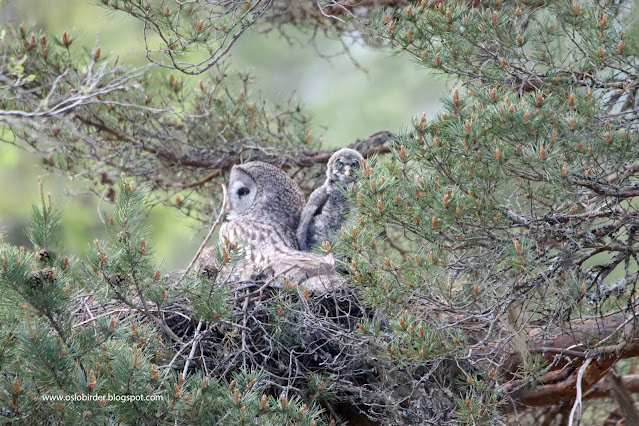 |
| and then climbed on top of her |
 |
| male Violet Copper (fiolett gullvinge) |
 |
| and the subject of today's twitch a Scarce Heath (heroringvinge) |


No comments:
Post a Comment